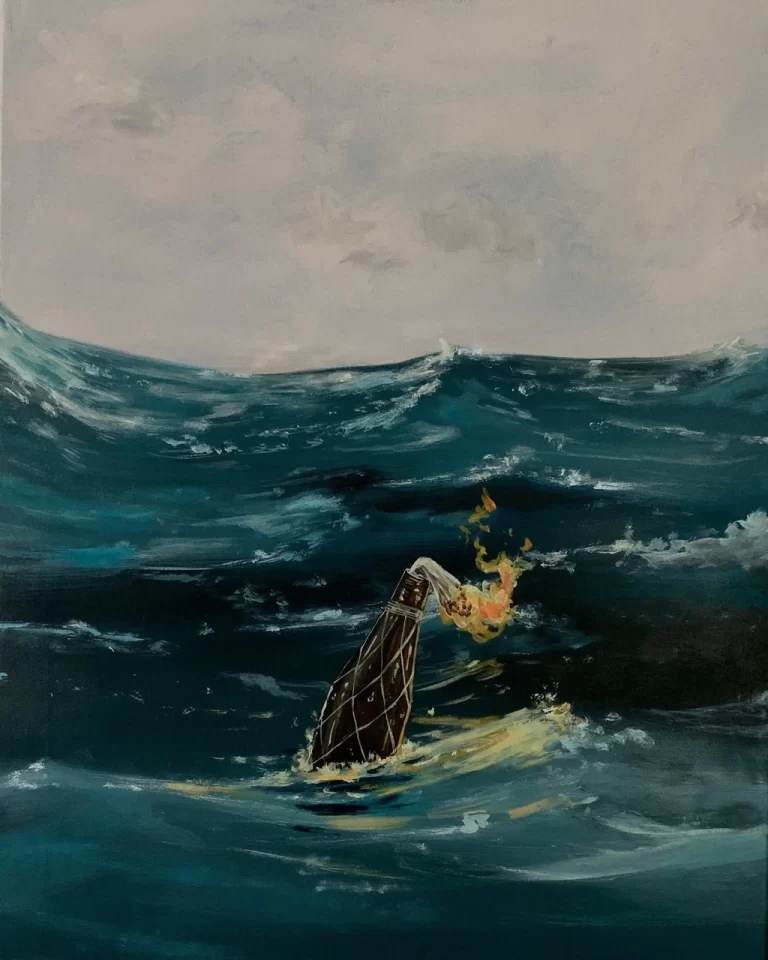




The Caribbean has had a primitive structure since the times when our aborigines migrated in canoes. In this sea of alternating current that the blues romanticize, enslaved and mestizos have inherited the concern of wanting to leave its geographical limits. It is a feeling of desire that has turned us into cartographers by nature, projecting and drawing maps in search of our own connections.
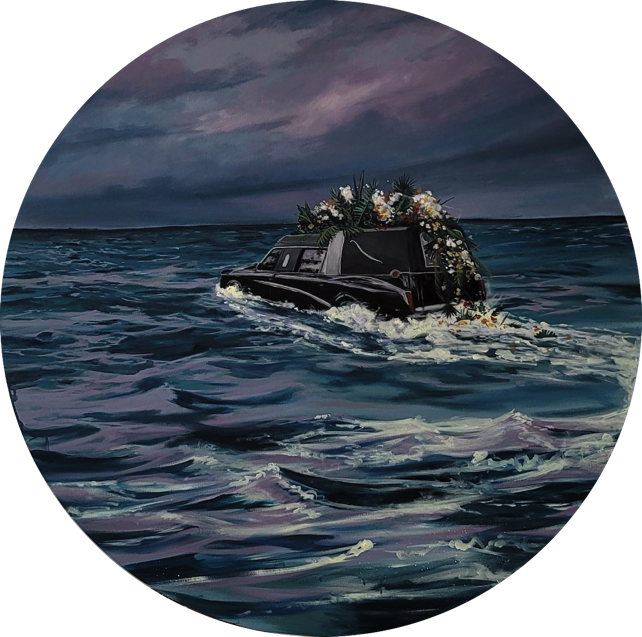
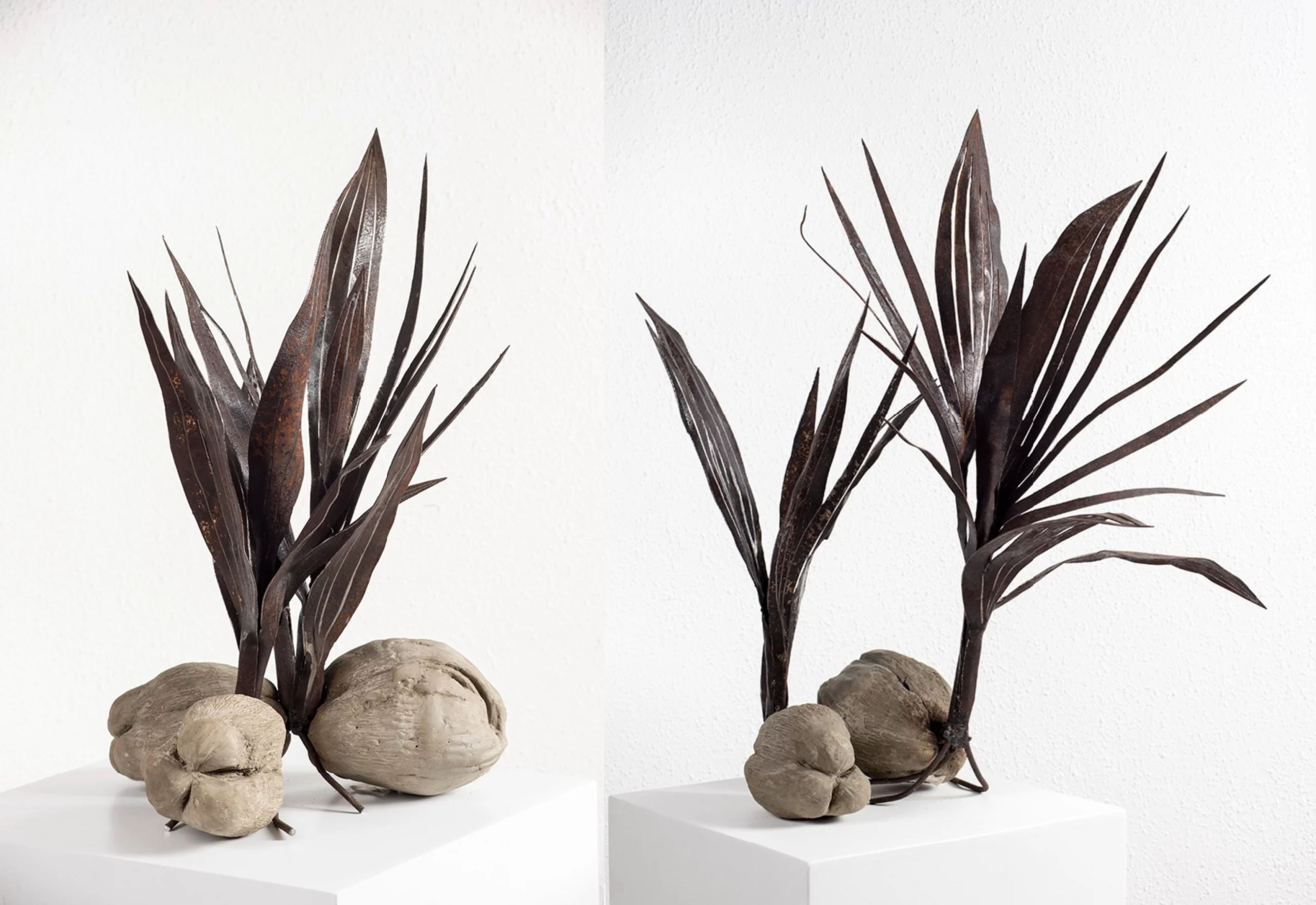
Today Franz Caba, architect and self-taught artist, is constructing imaginary narratives of a recent past, crossing these waters in dismal limousines, sweetened with endemic and imported flowers, to disembark in a jungle of bonsai trees made of rod and cement tattooed with the purest decal. Lolo Jackson style.
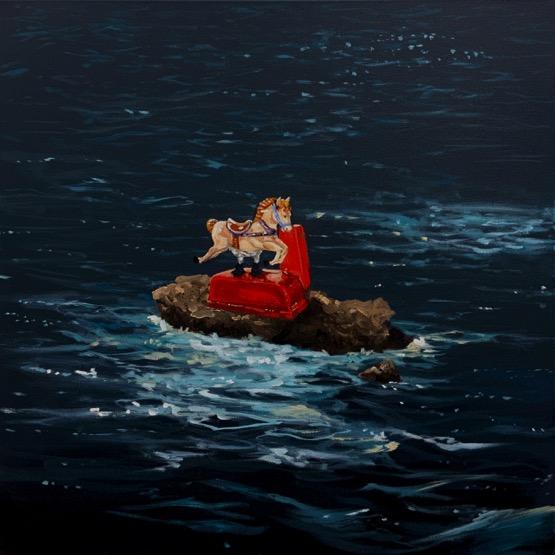
Here he leaves behind family knots and tropical depressions to focus on the popular Dominican identity, following knowledge of a greater spatial dimension: the Caribbean context. He rigorously highlights the element that unites us as floating Instances, the same one that separates us, that infinite blue mantle that he emphasizes in his work to make us participate in a process of searching for identity.
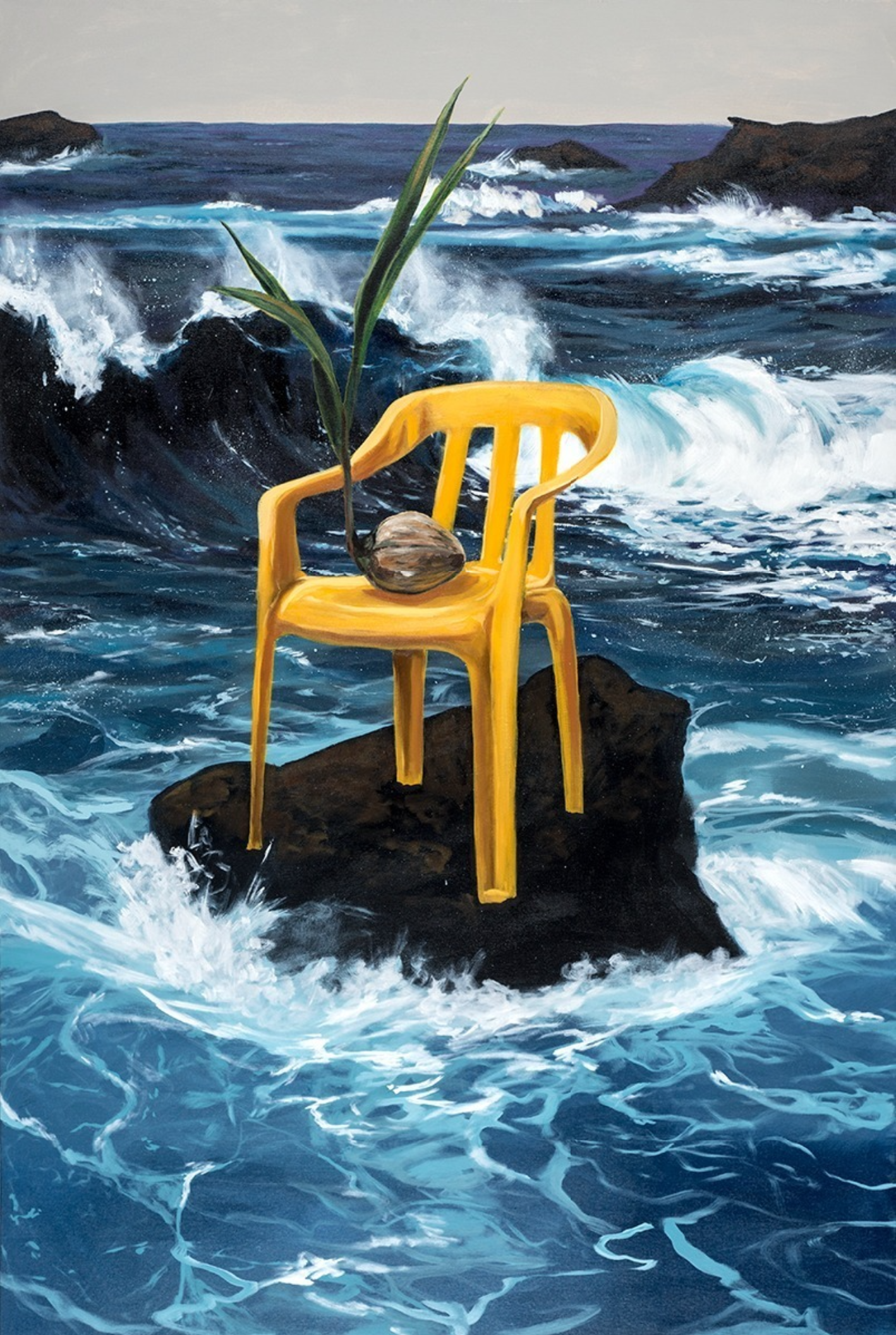
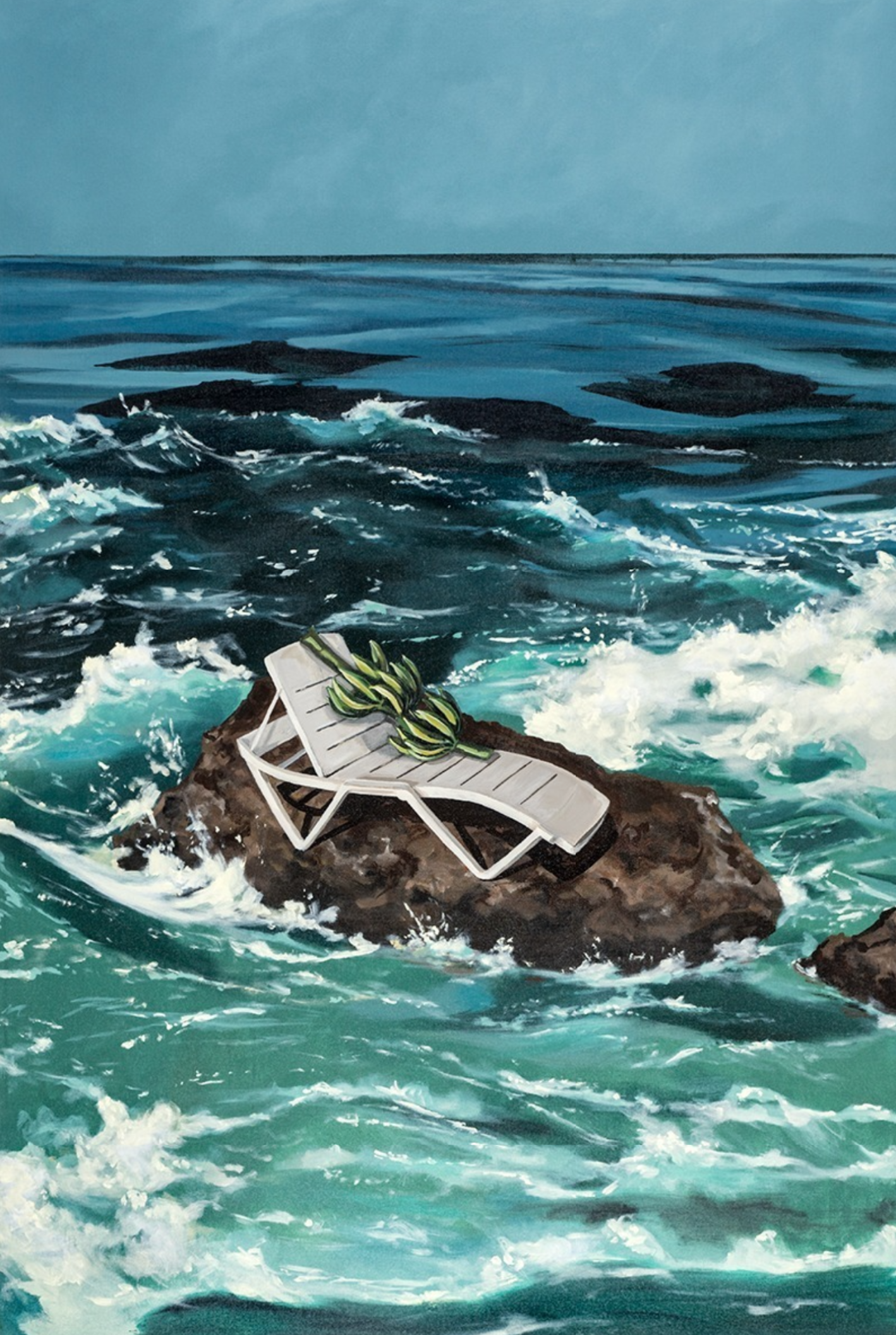
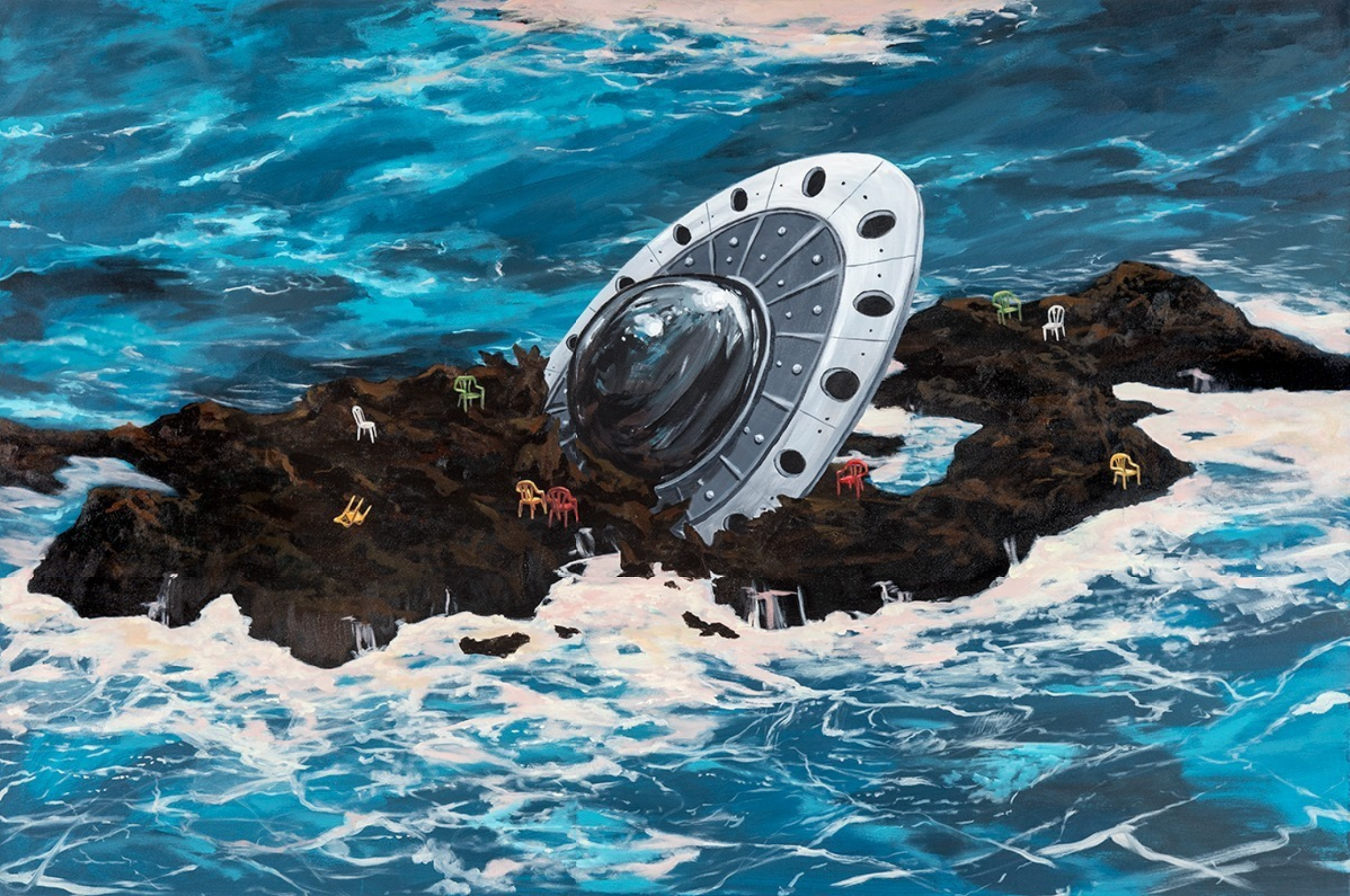
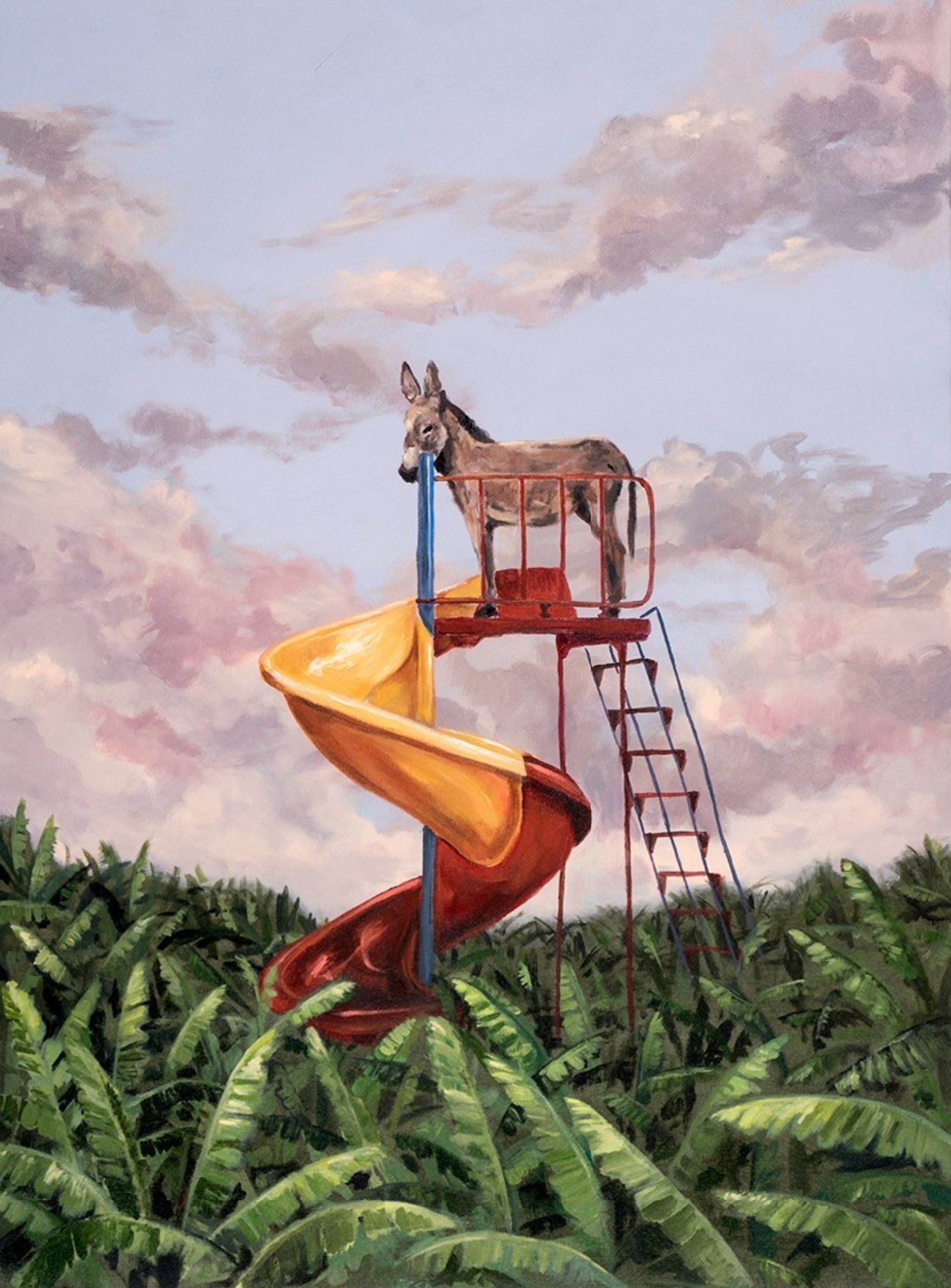
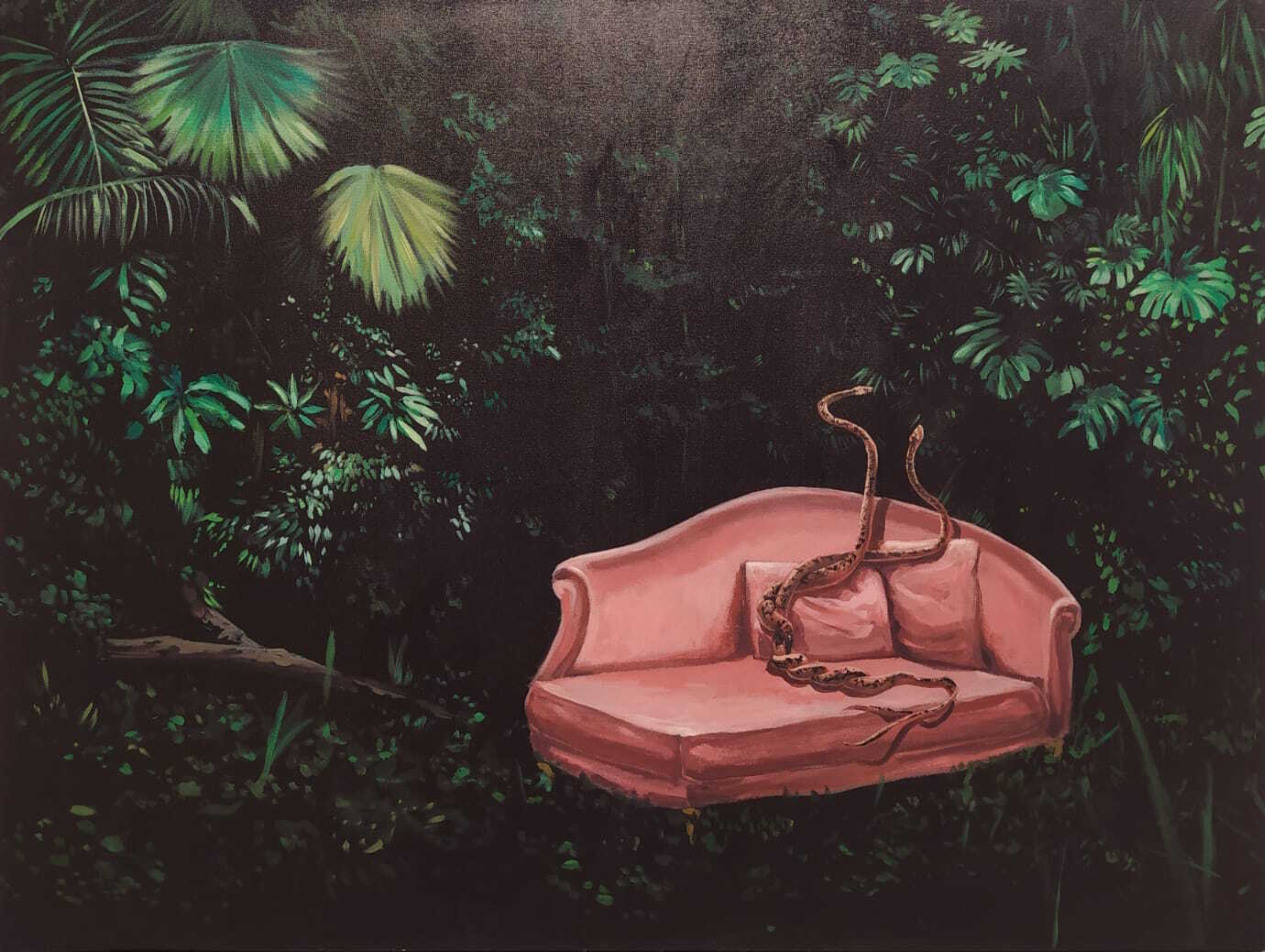
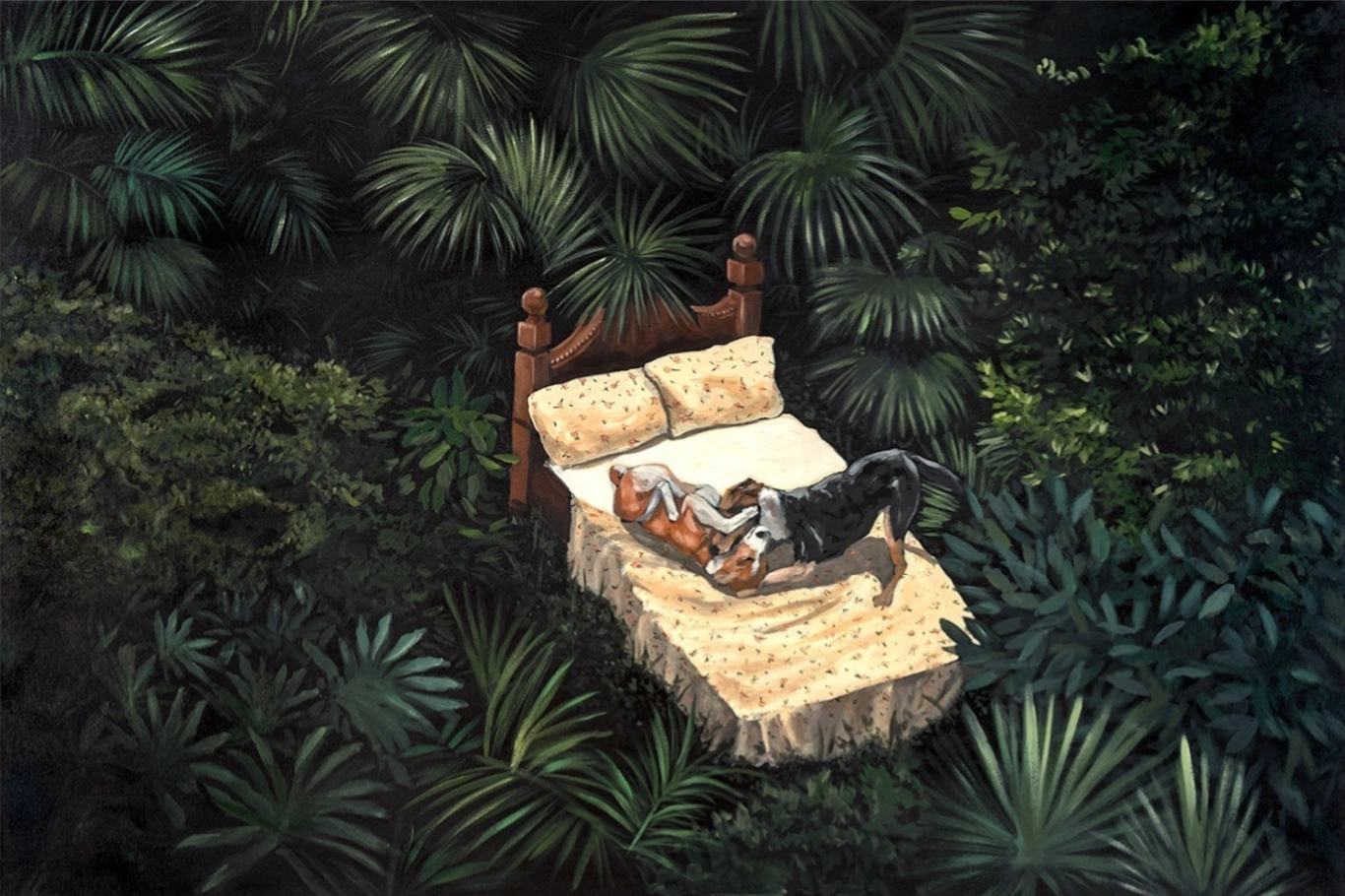
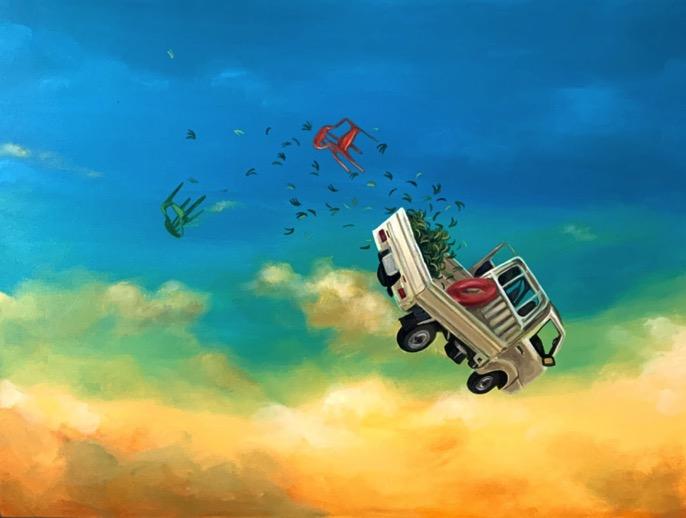
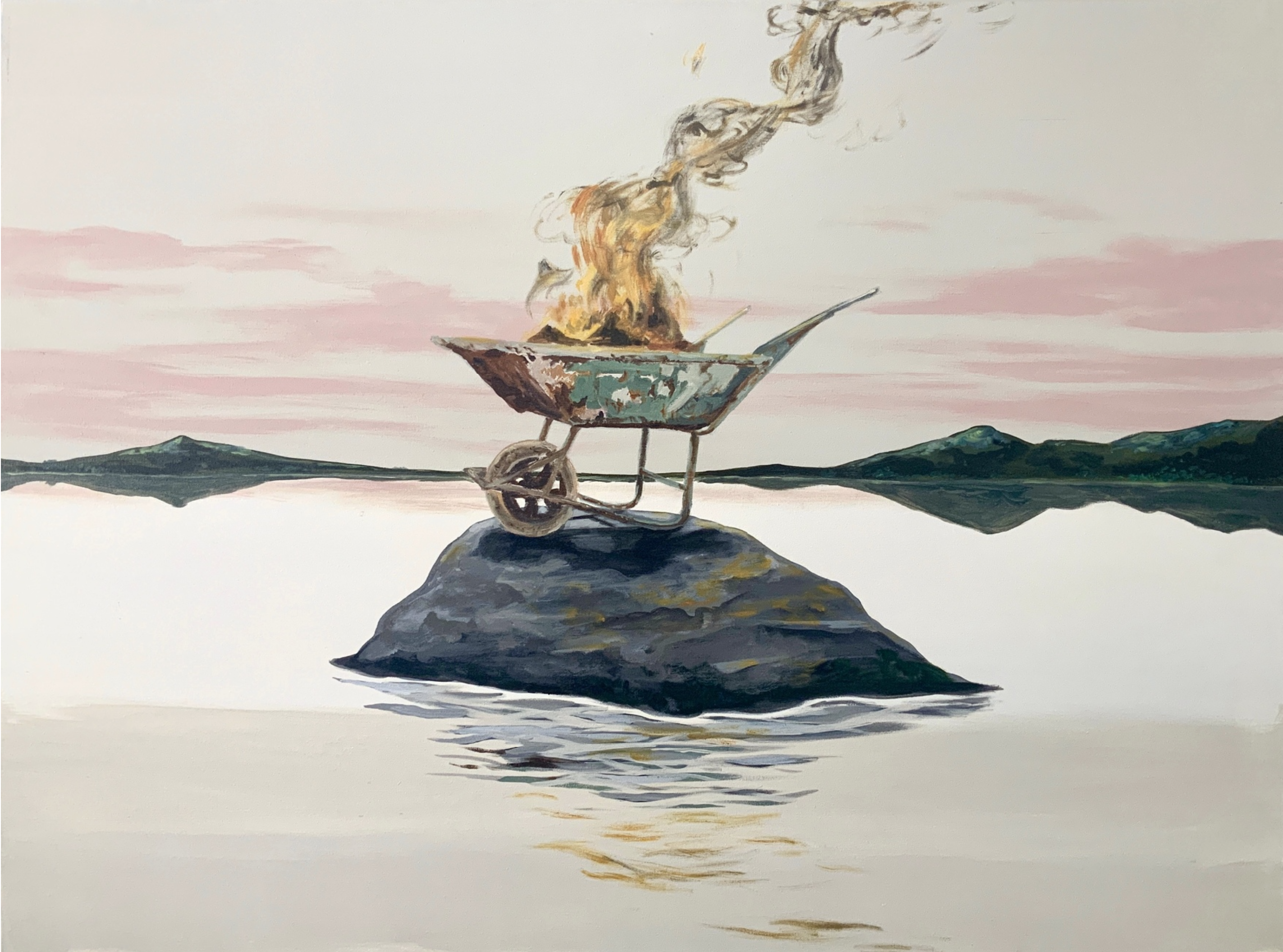
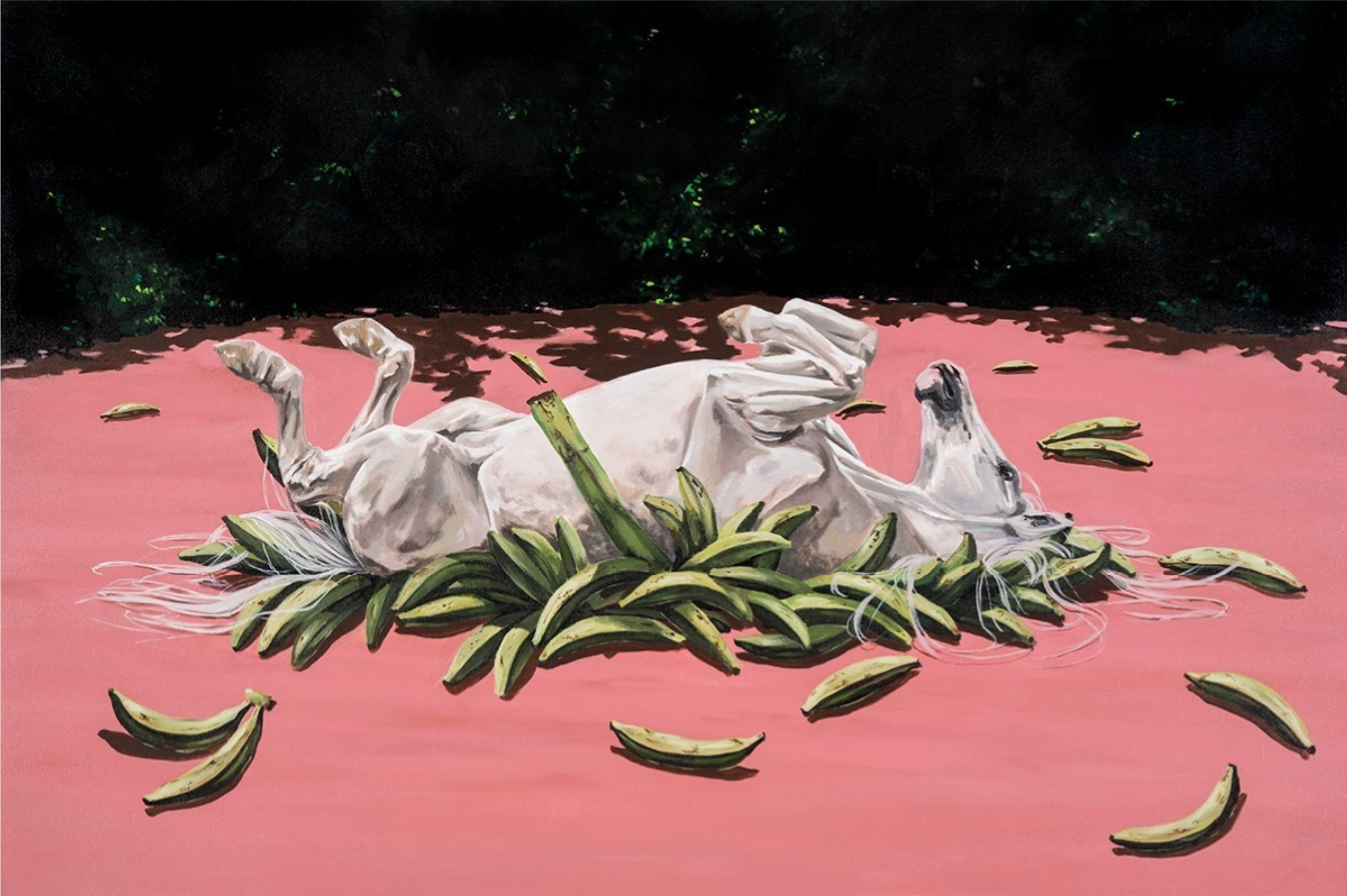
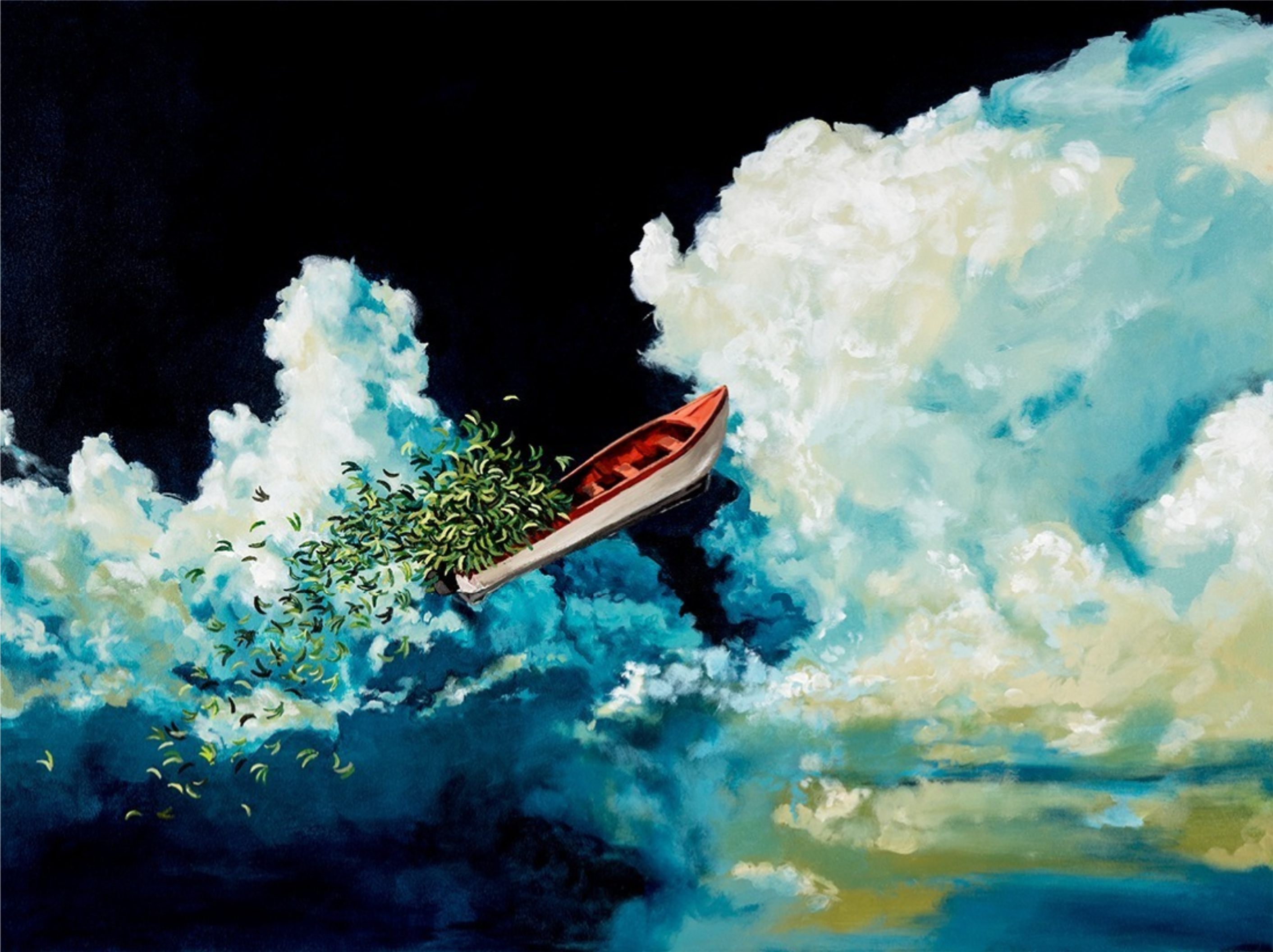
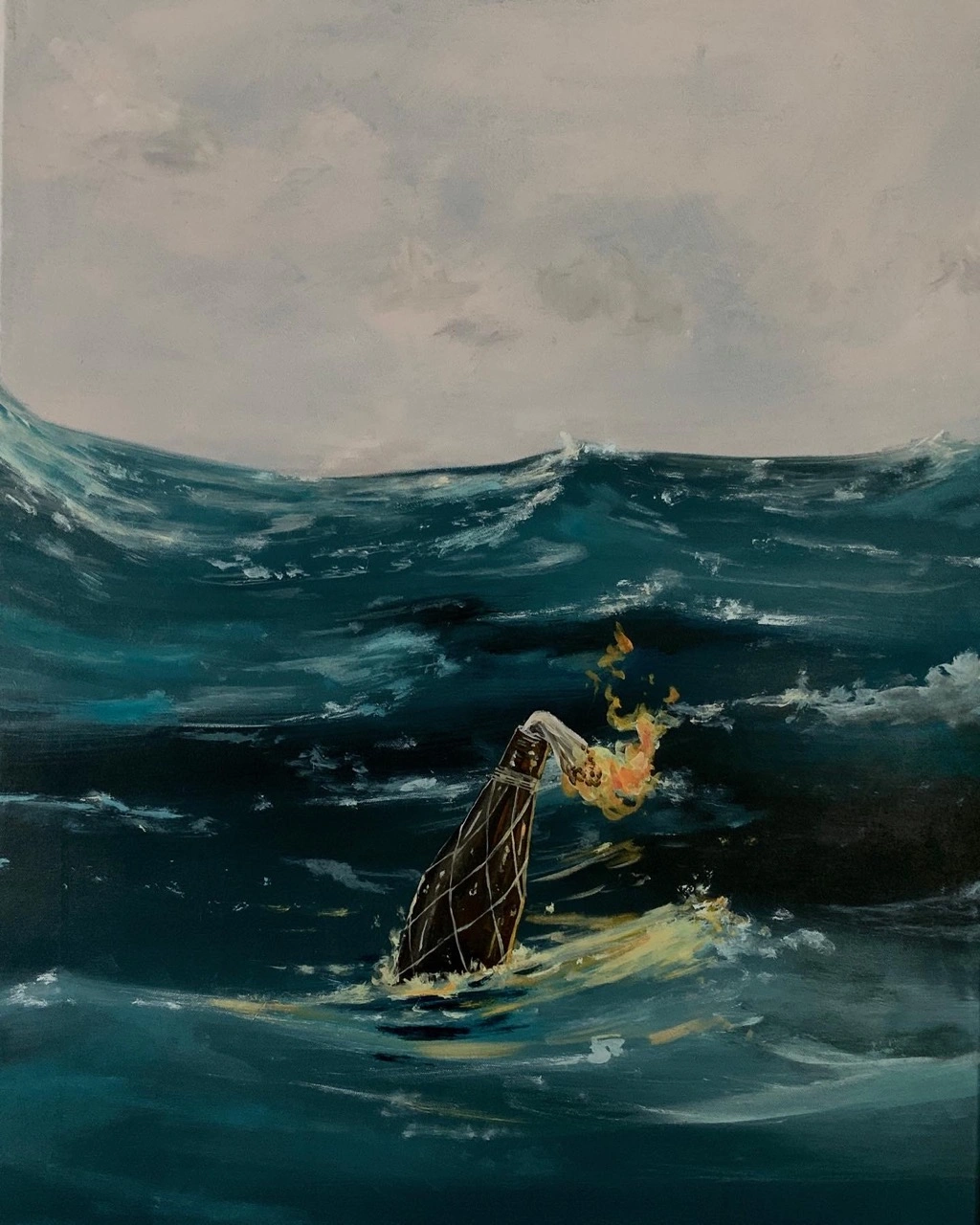
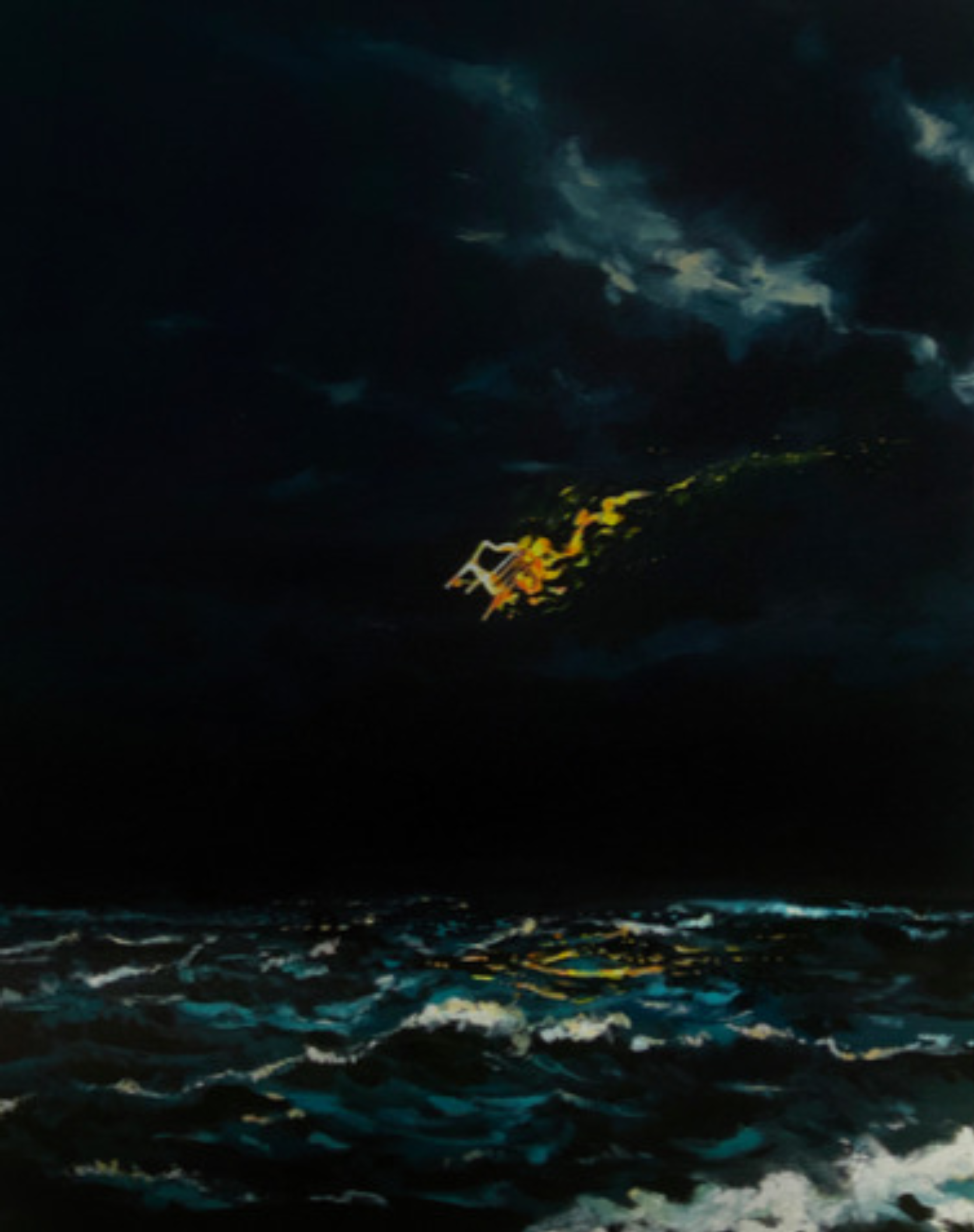
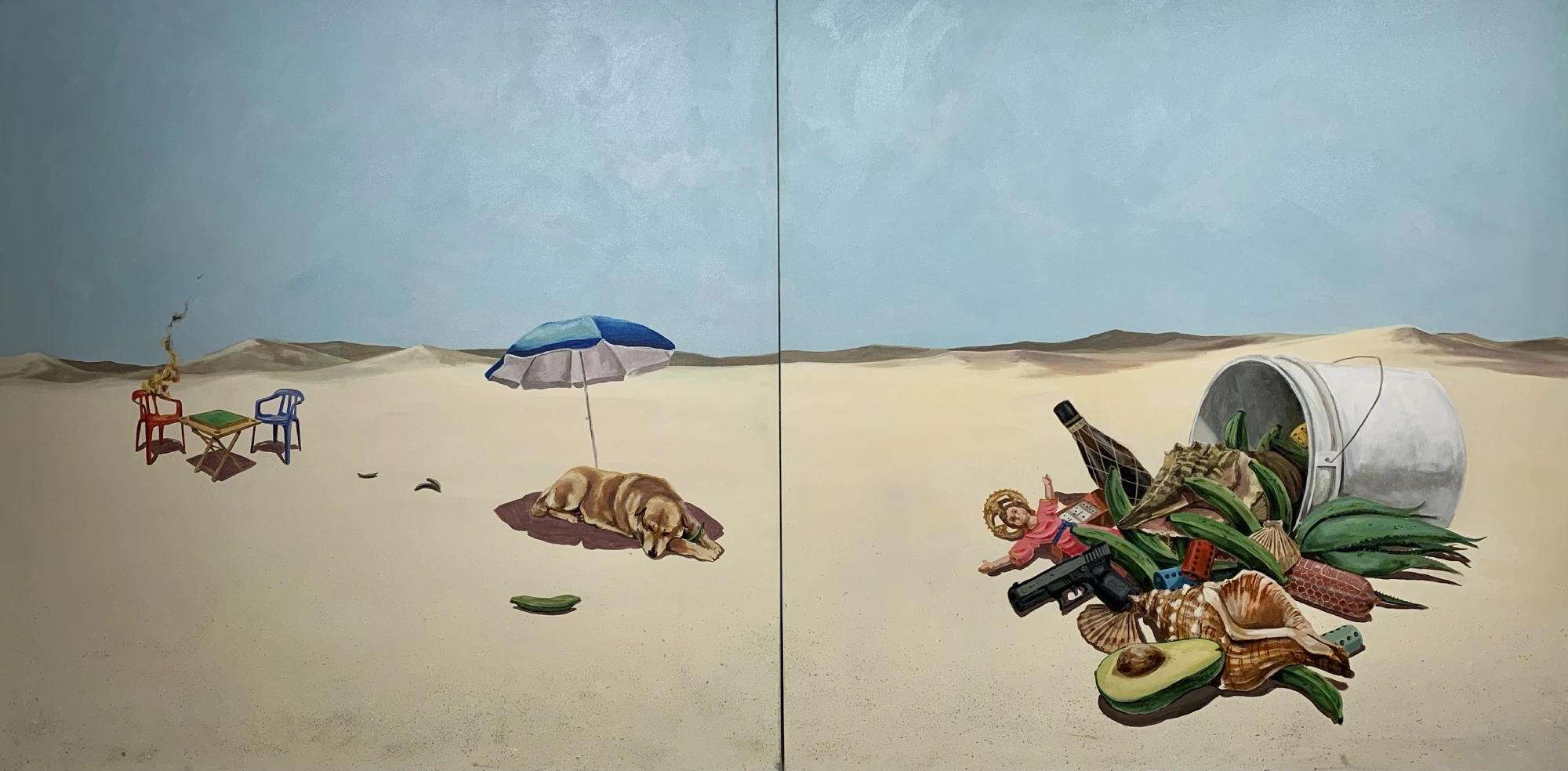
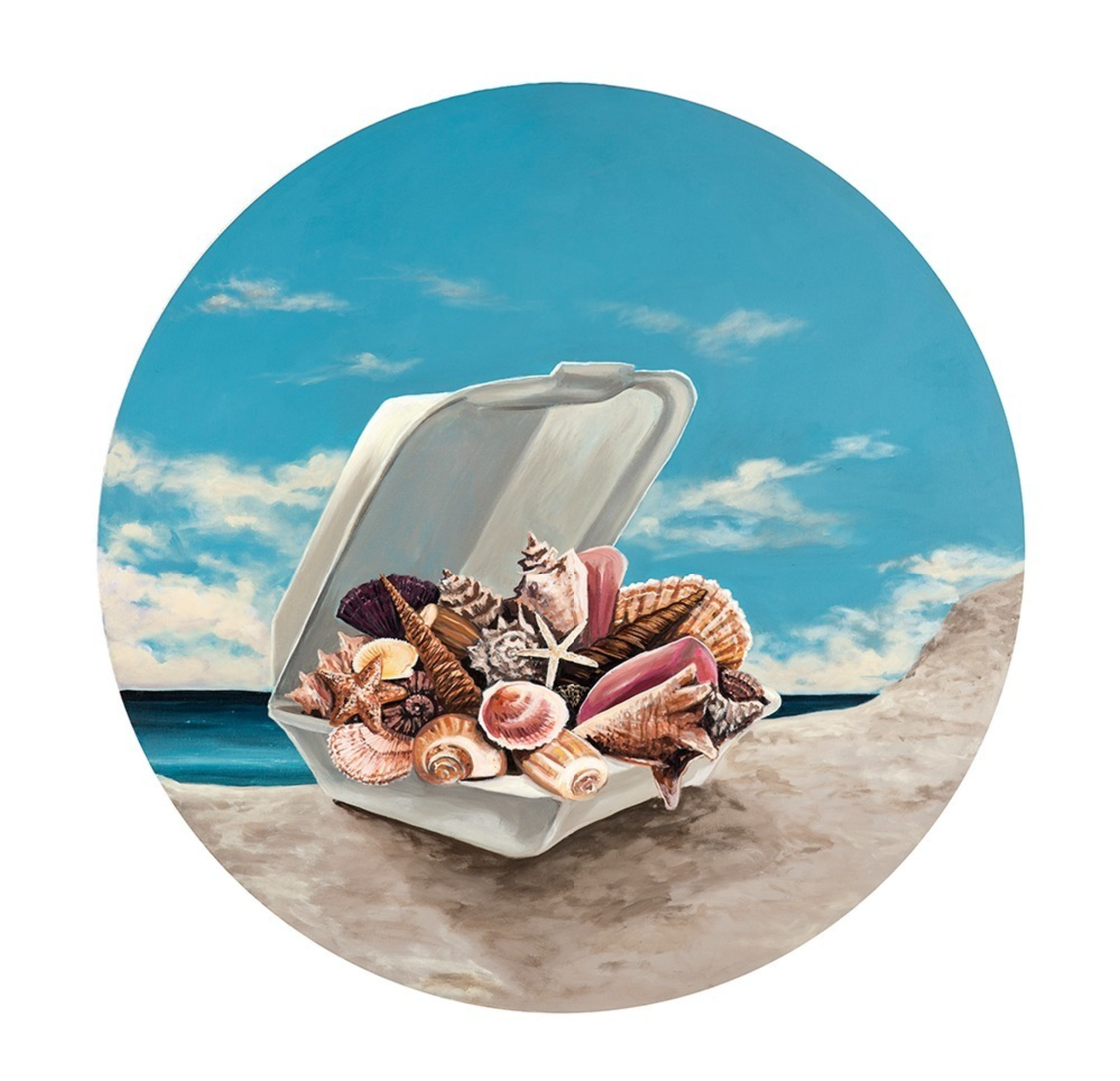
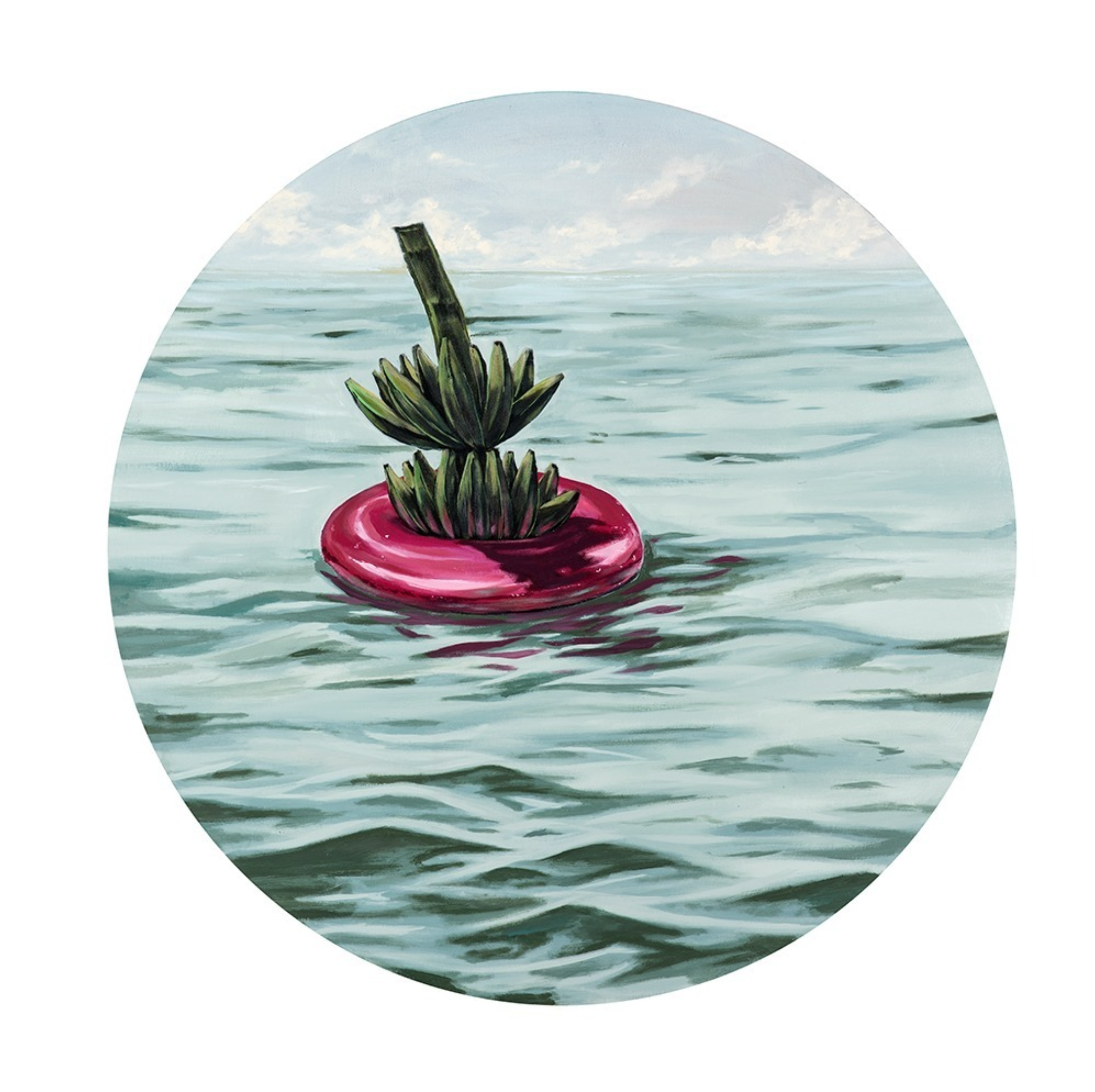
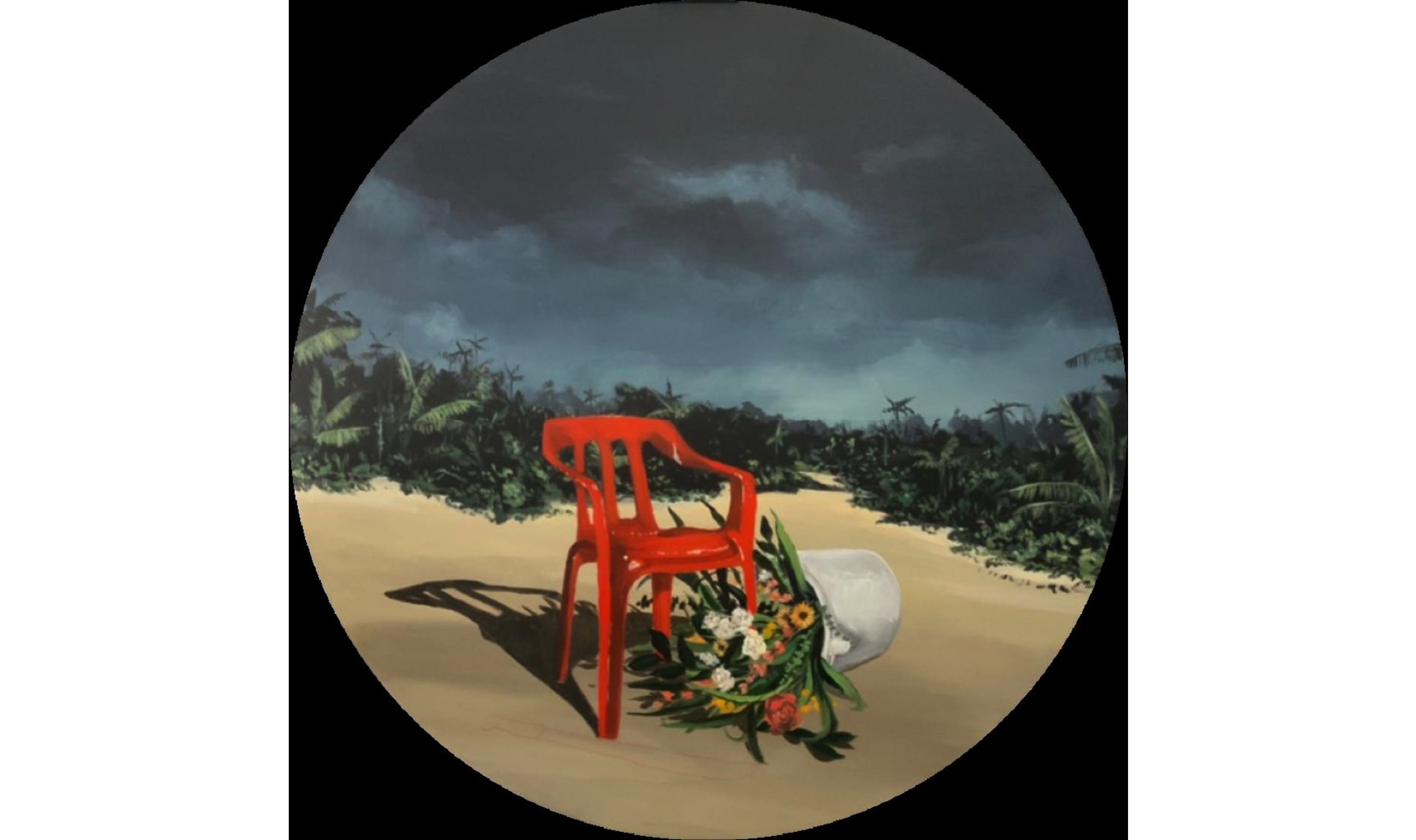
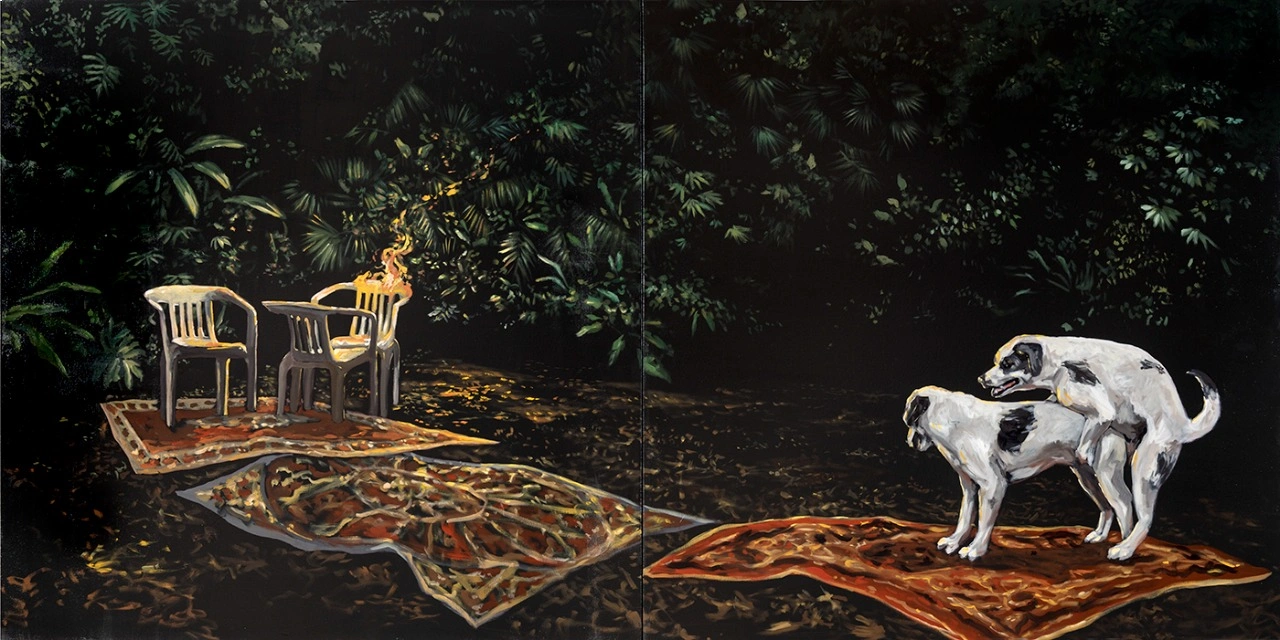
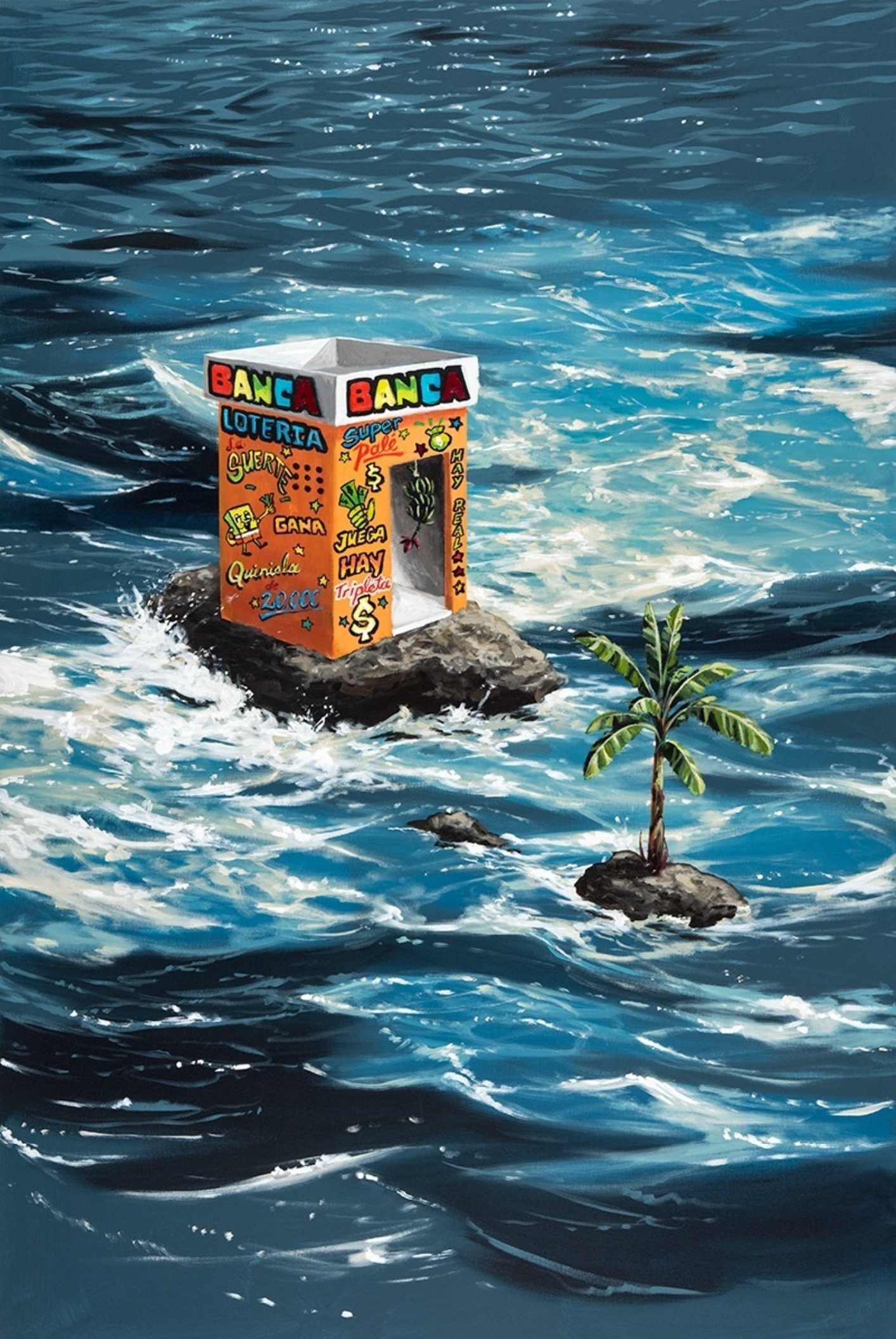
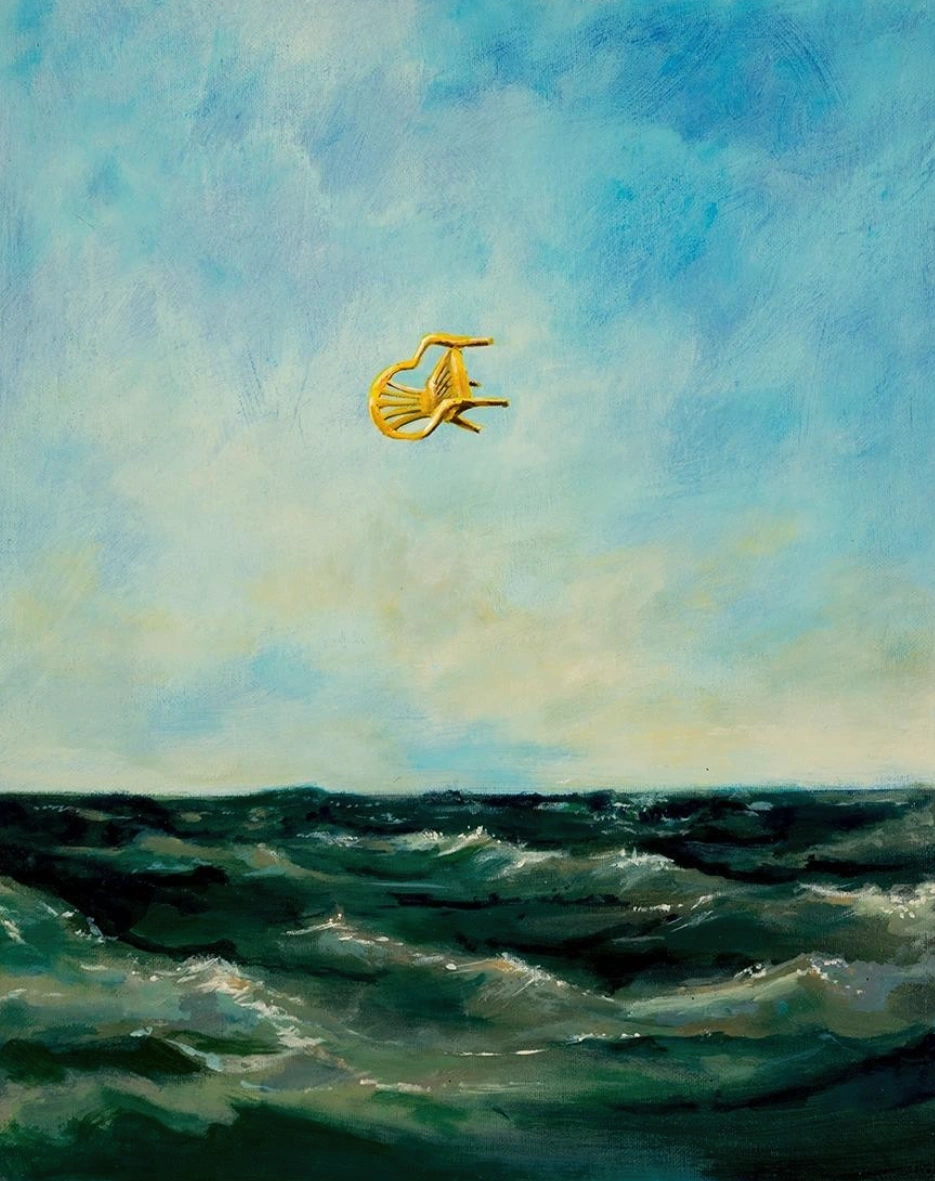
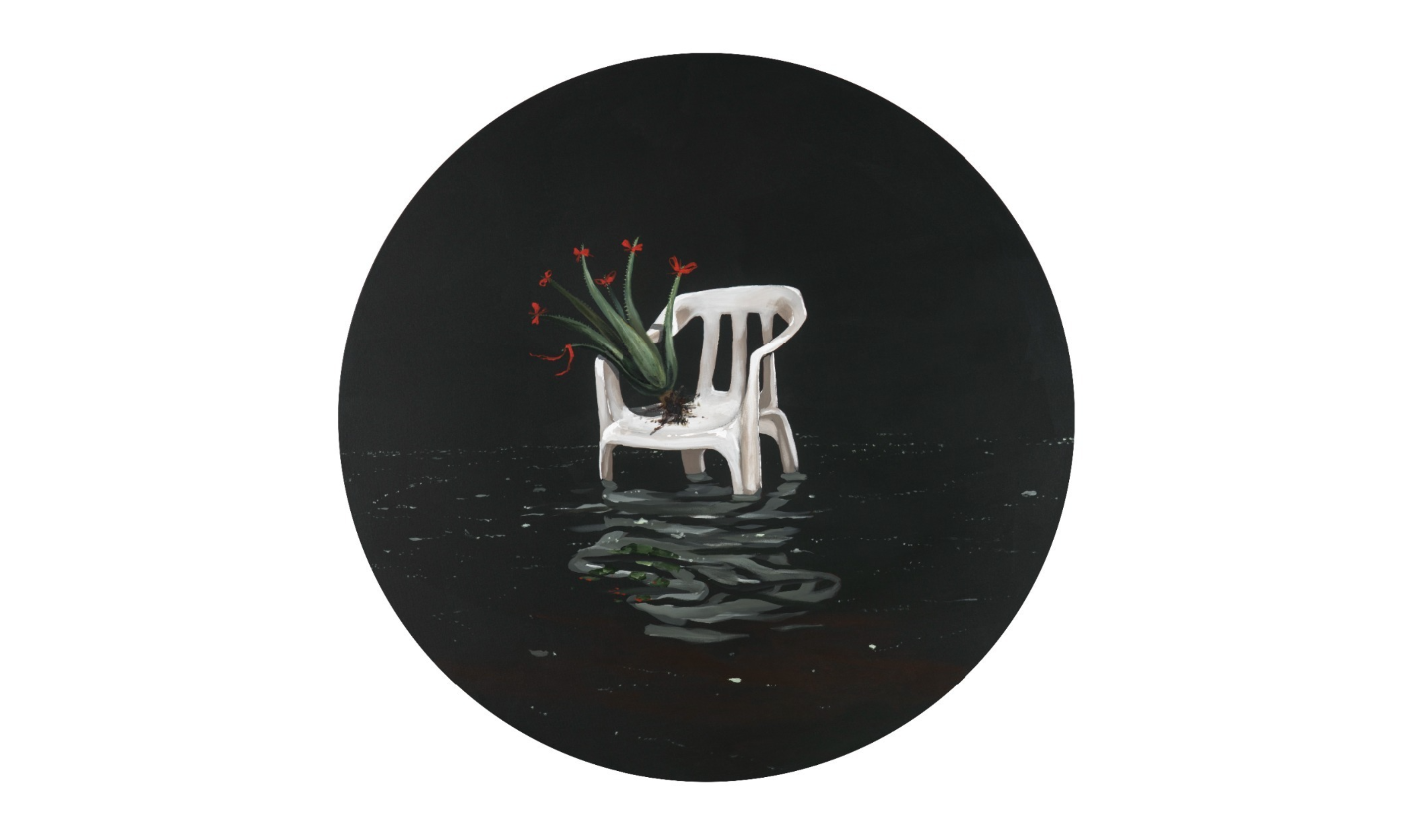
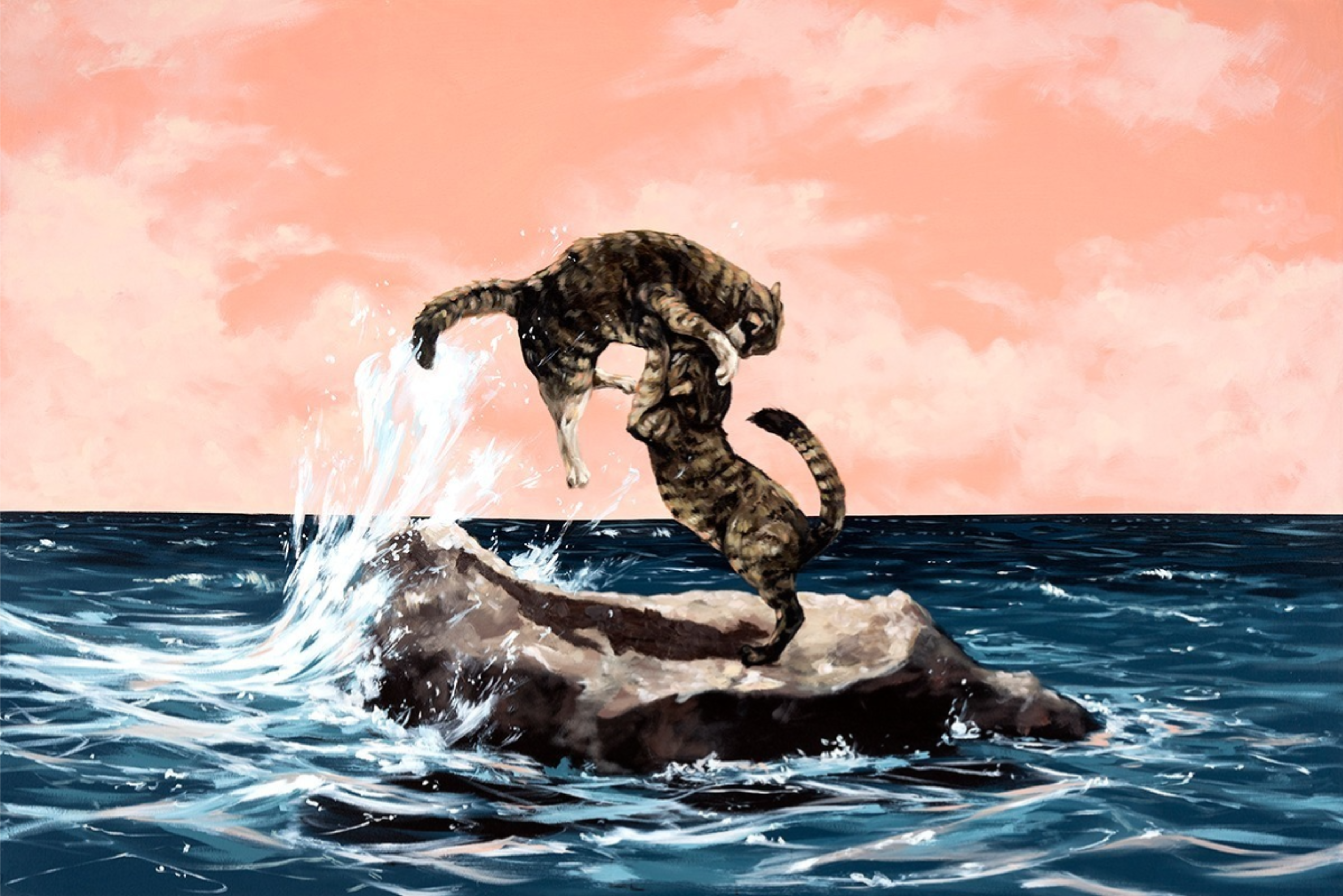
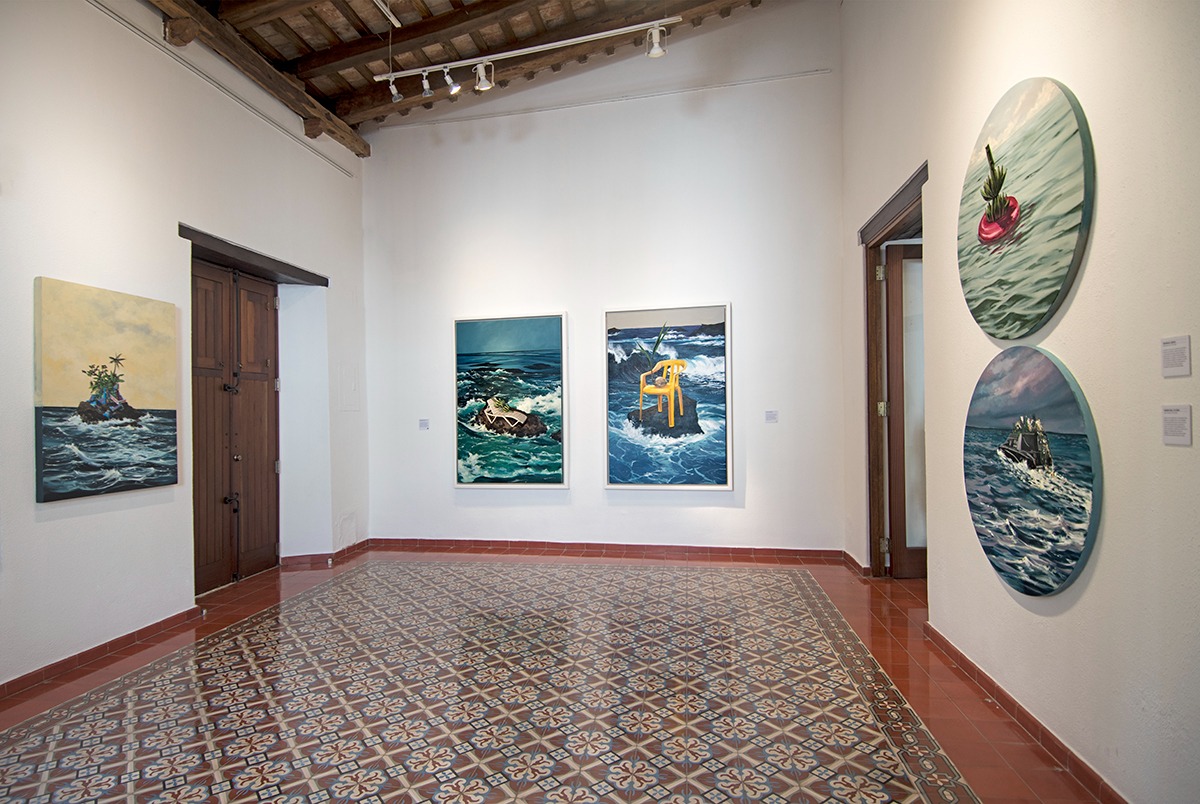
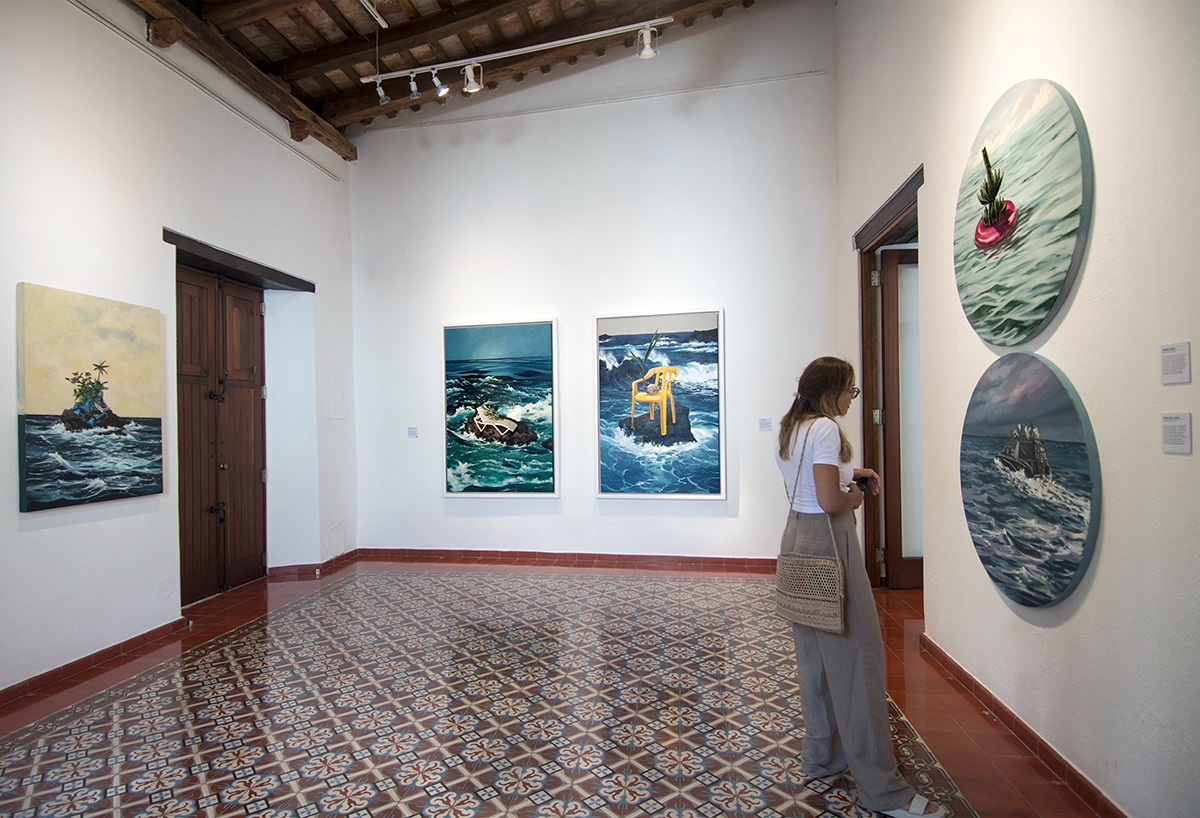
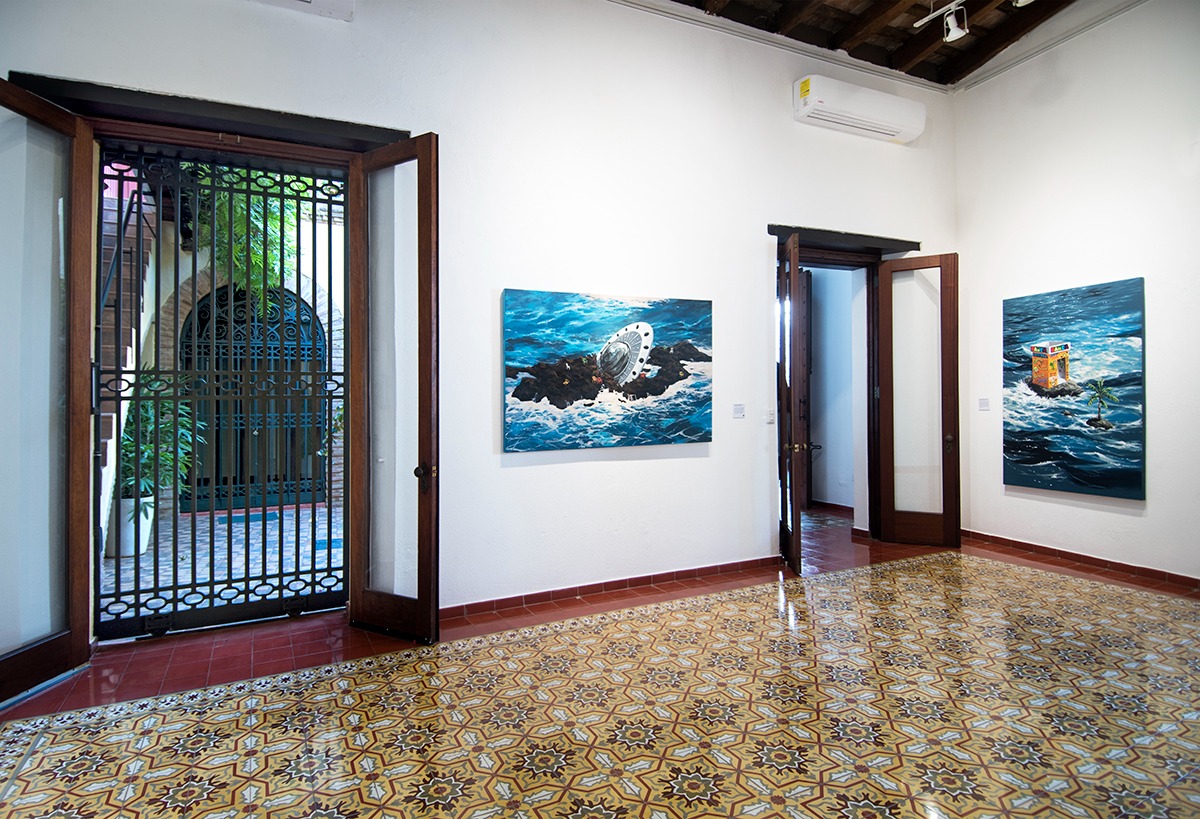
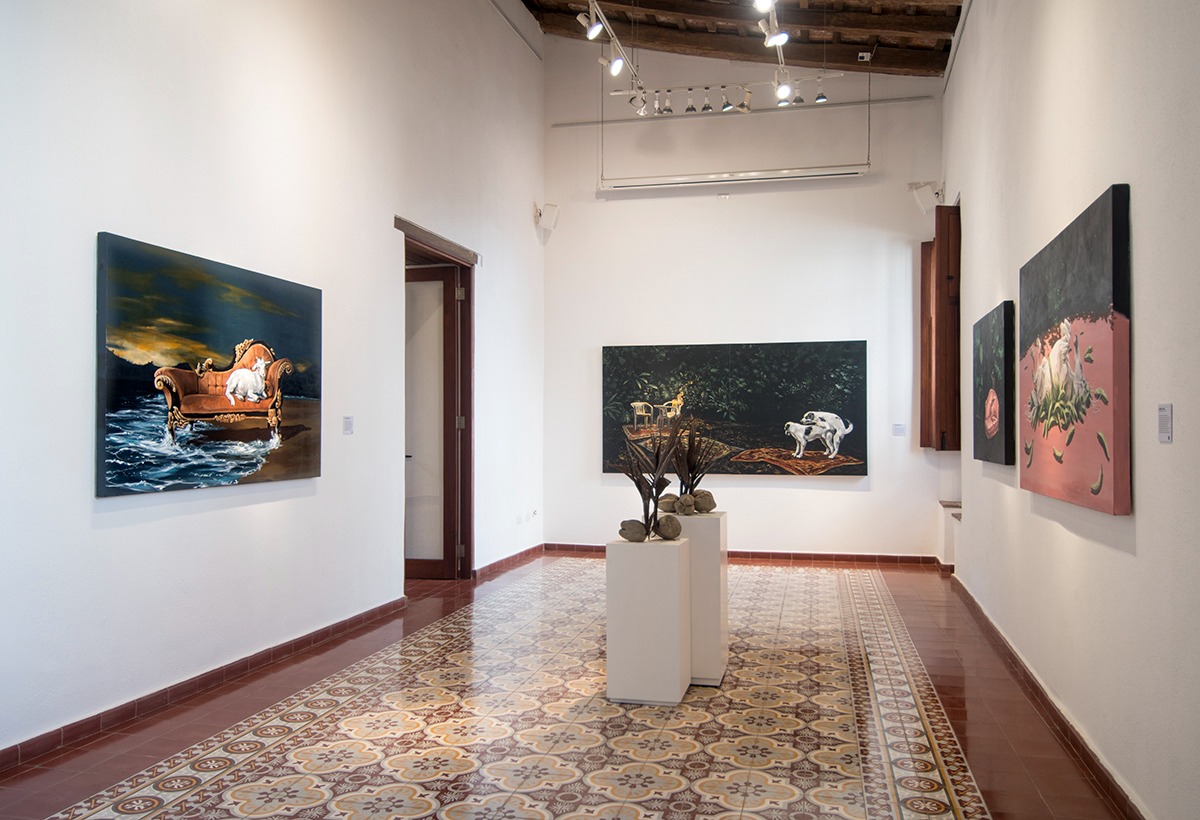
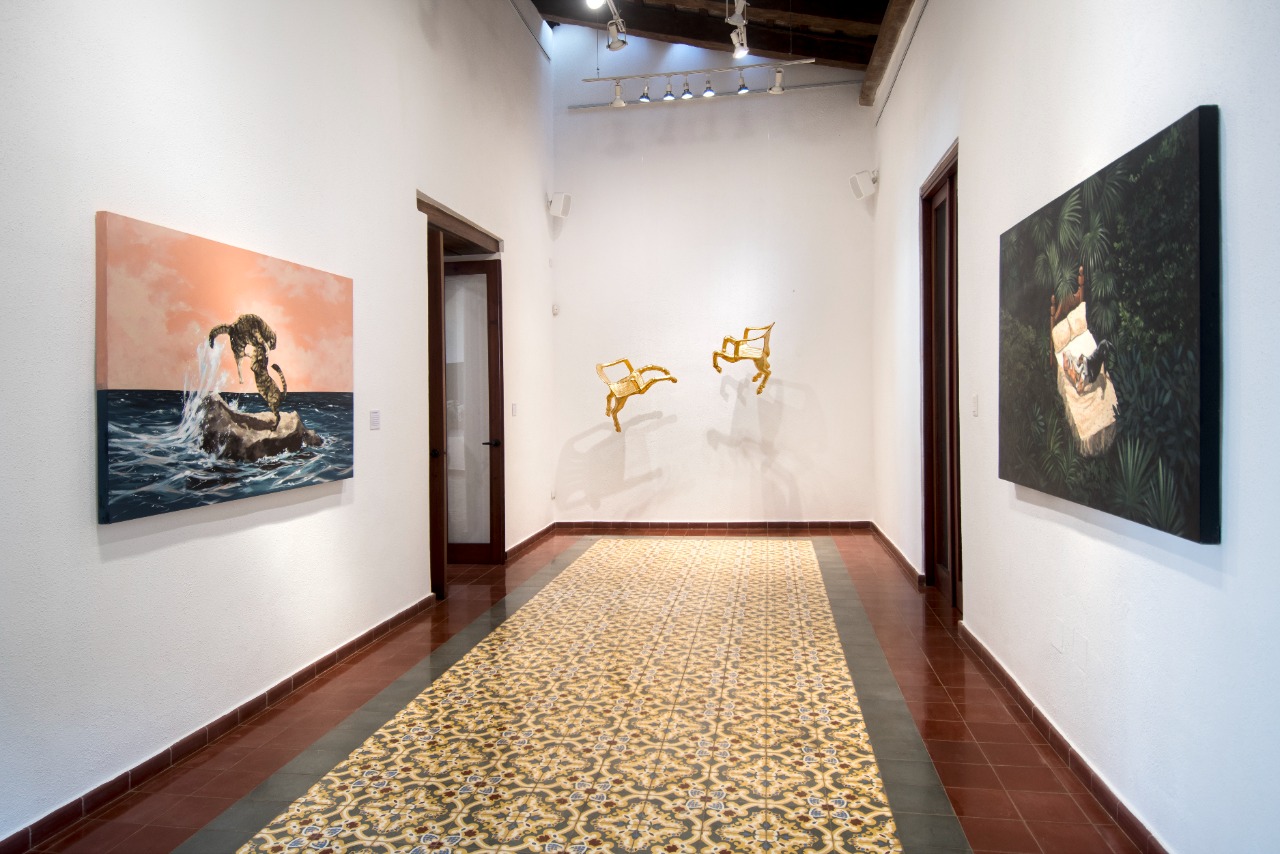
The series I am here but it is not me, builds metaphors from its own geography, leading it to capture Renaissance skies and seas in a mixture of a pop Caribbean that also leaves traces and impressionist brushstrokes. It is a universe of scenographic contradictions where fiction and fantasy are intertwined with stories of regional roots and heritage. For example, we see how, from the formal aspect, the representation of their palms does not seek a real figuration, but rather resembles beach souvenirs intended for gift shops, a gesture that is related to the barter that historically occurs in our territory, but that in contemporary times we are participants even with our own bodies.
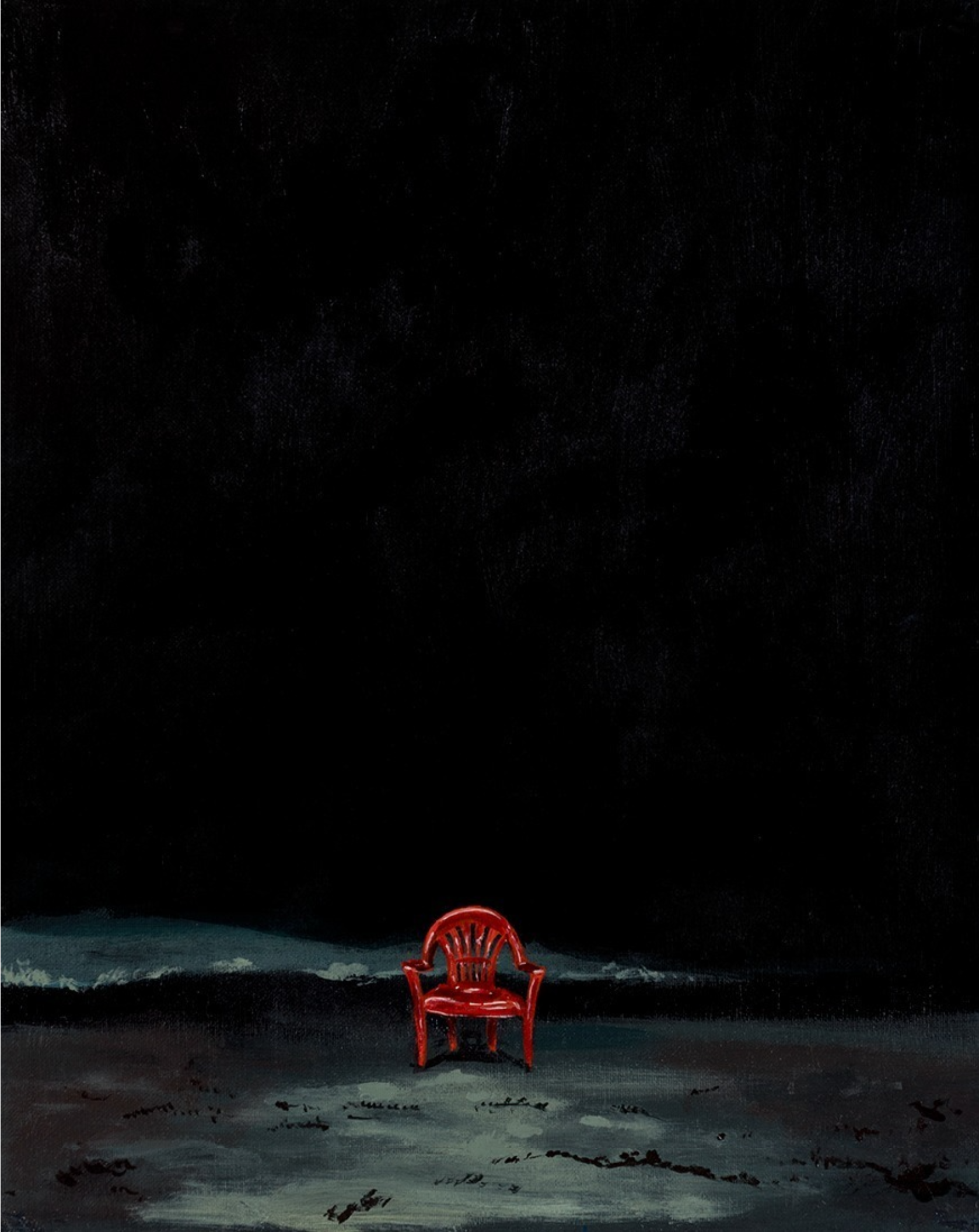
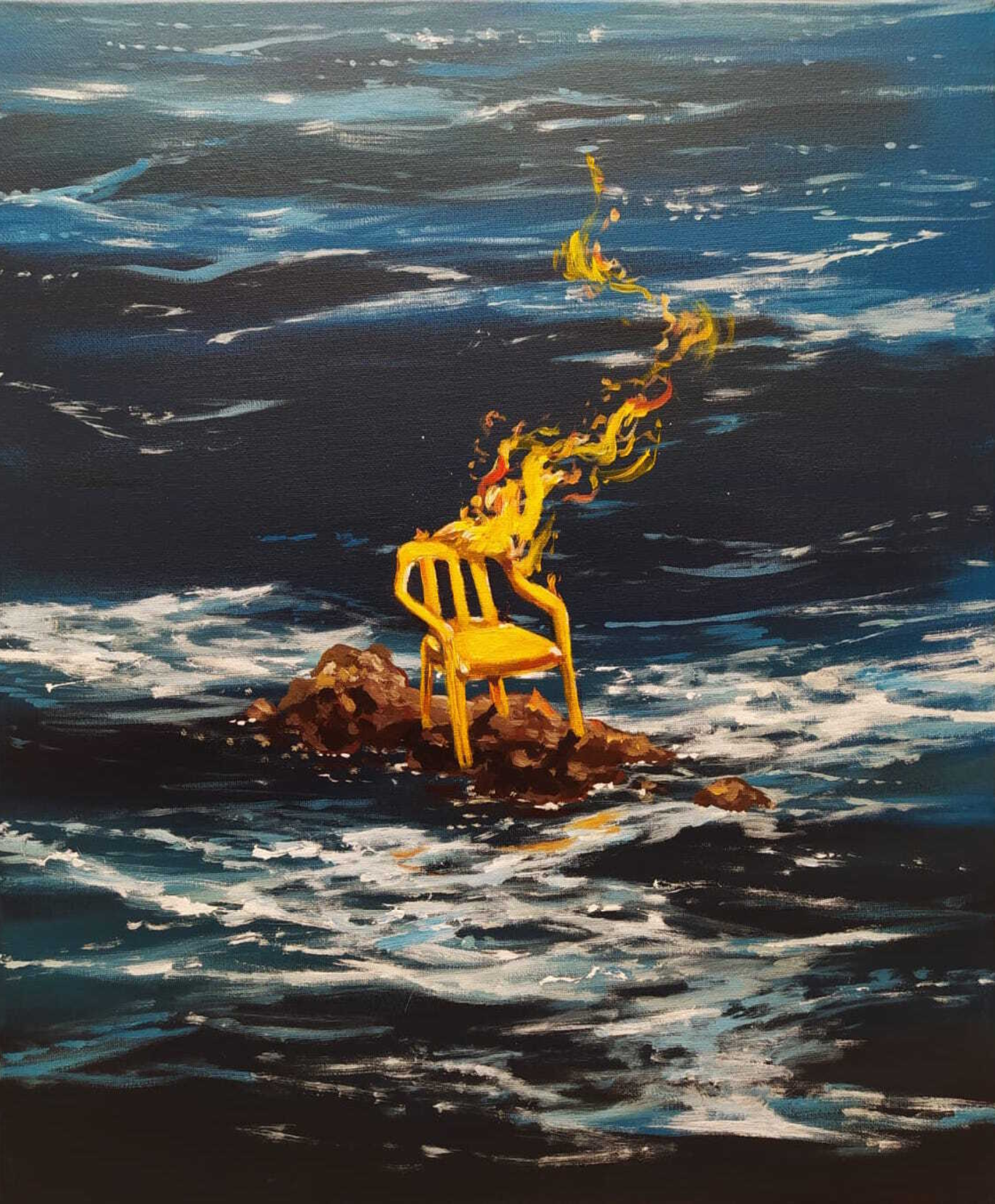
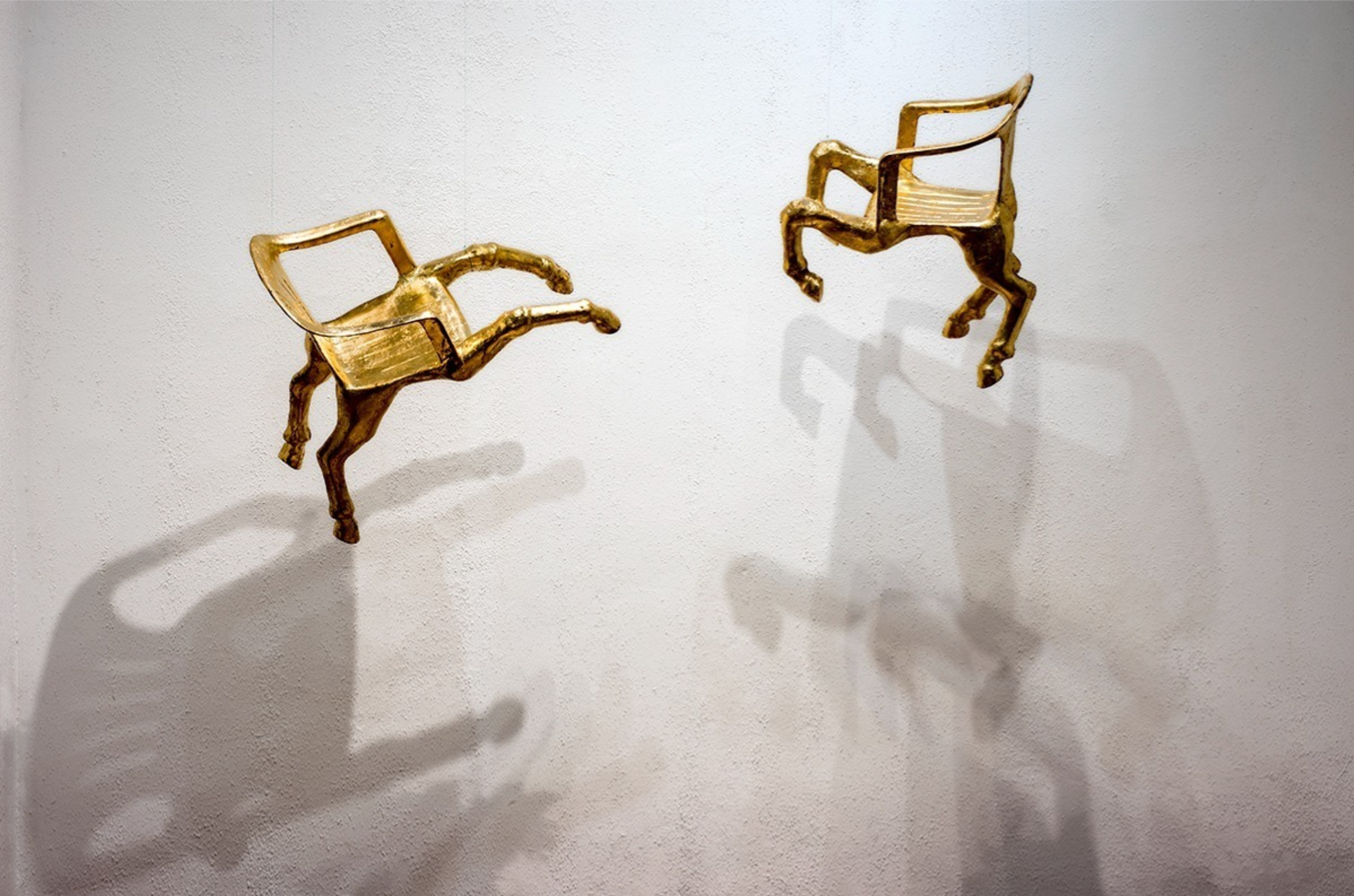
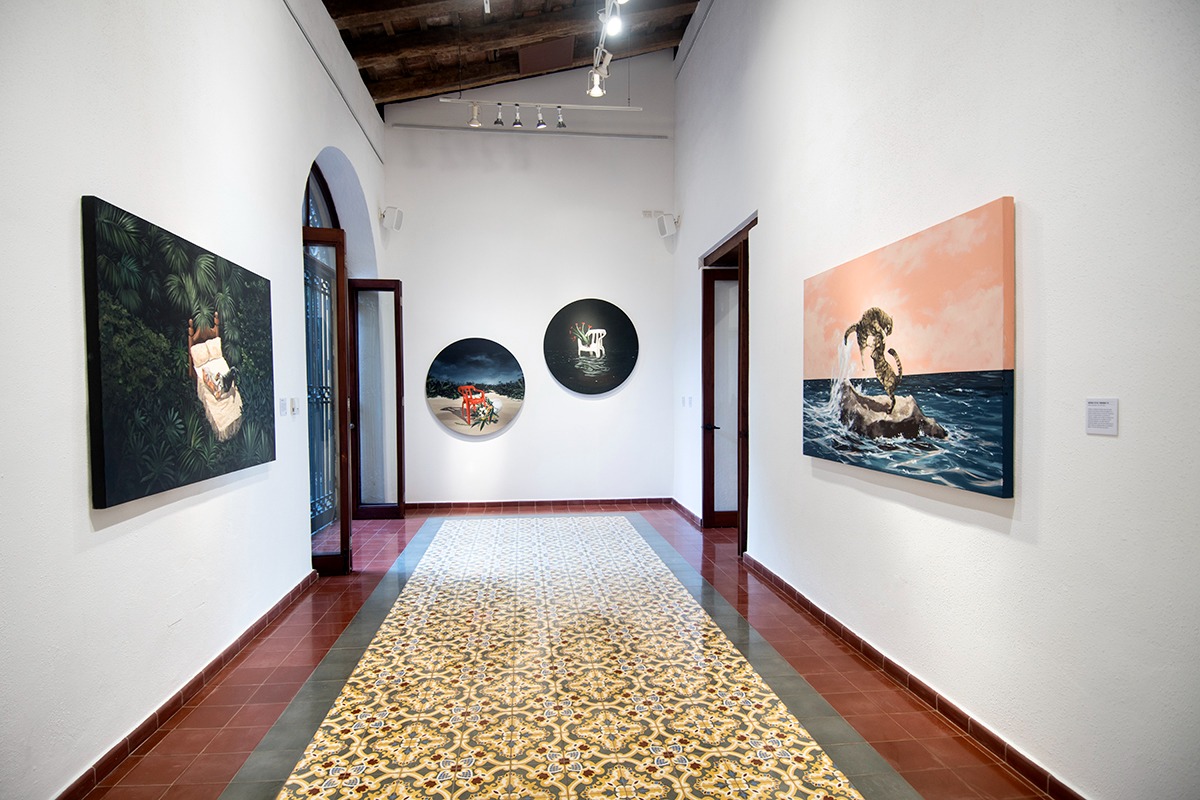
Your narrative brings protagonists who are in unexpected stories, like the plastic chair, another gesture serves with great symbolic load that our medium refers to social coexistence and leisure. Elements such as the coconut and the palm tree also appear, both identity symbols of the territory of enjoyment and hedonism.
The suggestive language with which Franz Caba reflects on relevant social issues demonstrates the commitment of a thriving generation of contemporary Dominican art. He assumes that commitment with independence, character and ingenuity in the face of absurd situations that we often take for granted in our environment but that deserve to be the object of introspection as a society.